Shandong Fengtu IOT Technology Co., Ltd
Sales Manager:Ms. Emily Wang
Cel,Whatsapp,Wechat:+86 15898932201
Email:info@fengtutec.com
Add:No. 155 Optoelectronic Industry Accelerator, Gaoxin District, Weifang, Shandong, China


Sales Manager:Ms. Emily Wang
Cel,Whatsapp,Wechat:+86 15898932201
Email:info@fengtutec.com
Add:No. 155 Optoelectronic Industry Accelerator, Gaoxin District, Weifang, Shandong, China
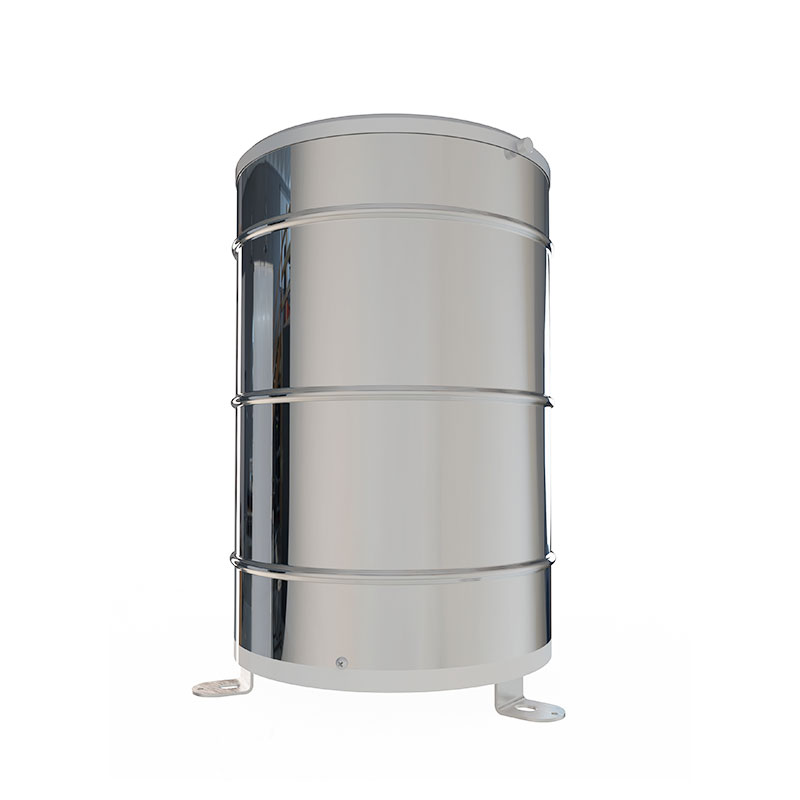
Model:YL1
Brand:fengtu
1.Tipping Bucket Rain Gauge Technical Indicators
1.Power supply: DC12V
2.Power consumption: 0.02W
3.Working environment: 0~50℃
4.Communication interface: RS485
5.Working current: 2mA DC12V
6.Shortest data interval: 0.5S
Tipping Bucket Rain Gauge Parameters
| Rain gauge cylinder diameter | Φ200mm |
| Operating temperature | 0~50℃ |
| Operating humidity | <95% (no condensation) |
| error | ≤±2% |
| Resolution | 0.2mm |
| Rainfall intensity range | 0mm~4mm/min, the maximum rainfall intensity allowed is 8mm/min |
| Heavy rain intensity range | 0~10mm/min, the maximum rainfall intensity allowed is 15mm/min |
| Output method | Modbus485 |
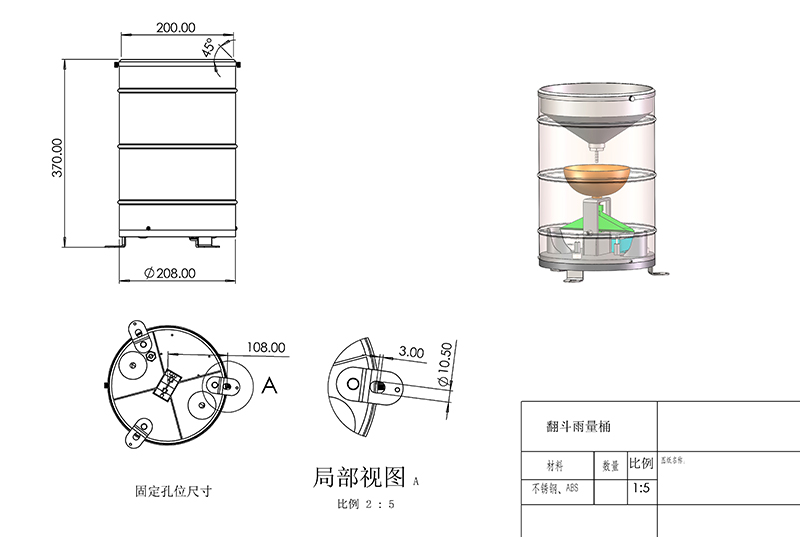
3.Tipping Bucket Rain Gauge Product Dimensions
Agrometeorological stations are small automatic weather stations deployed in farmlands, orchards, greenhouses and other areas. They automatically monitor climate and environmental factors closely related to agricultural production activities, helping farmers and researchers grasp field environmental...
Soil Moisture Sensor enables stratified monitoring of soil profile temperature, moisture, and electrical conductivity. It supports customizable monitoring depths, utilizes dielectric constant modeling for precise calculation, adapts to diverse soil conditions, and is widely used in smart agriculture...
In the audit of highway construction projects, the construction quality and operational status of highway projects have always been the top priorities of inspection. Traditional audit inspection methods, such as drilling and coring inspection, have many drawbacks that cannot be ignored. The inspecti...
Agricultural Environment Monitoring System is a professional device developed for greenhouse and similar scenarios. It integrates meteorological sensors, a data logger, a solar power system, a pole support, and a cloud platform. It can monitor air temperature and humidity, light intensity, CO₂...


 Get a Free Quote
 Skype
Skype
 whatsapp
 mail
mail