Shandong Fengtu IOT Technology Co., Ltd
Sales Manager:Ms. Emily Wang
Cel,Whatsapp,Wechat:+86 15898932201
Email:info@fengtutec.com
Add:No. 155 Optoelectronic Industry Accelerator, Gaoxin District, Weifang, Shandong, China


Sales Manager:Ms. Emily Wang
Cel,Whatsapp,Wechat:+86 15898932201
Email:info@fengtutec.com
Add:No. 155 Optoelectronic Industry Accelerator, Gaoxin District, Weifang, Shandong, China
time:2024-12-24 09:23:29 source:Weather Station viewed:691 time
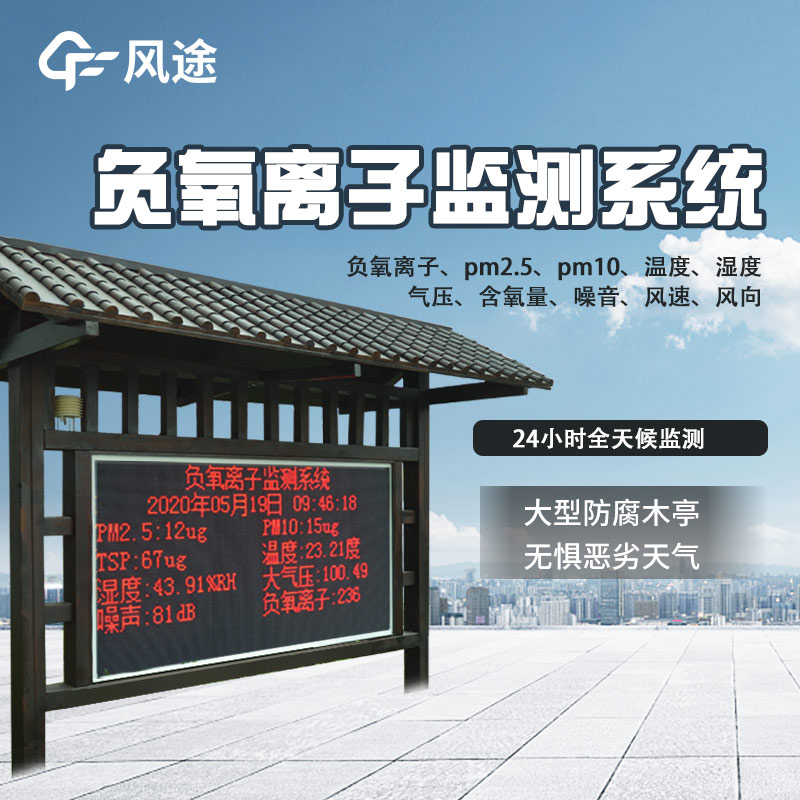
When we visit some parks and scenic areas, we often see an electronic screen on which real-time meteorological data, as well as negative oxygen ion and PM content, etc. are displayed. This is the Negative oxygen ion monitoring system.
The Negative oxygen ion monitoring system can not only monitor the concentration of negative oxygen ions in real time but also simultaneously monitor key parameters such as PM2.5, PM10, temperature, humidity, wind speed and wind direction, thus constructing a complete air quality assessment system. The monitoring data can be displayed in real time on a full-color liquid crystal large screen and uploaded to the company's cloud platform via wireless transmission technology, enabling remote viewing and analysis. This monitoring station is widely used in scenarios such as forest parks, nature reserves and ecological estates, and it comes in various styles to meet different needs.
Just imagine, in such parks or scenic areas, if managers can understand the air quality in real time through the Negative oxygen ion monitoring system, can they create a more comfortable environment for everyone? For example, when it is found that the concentration of negative oxygen ions drops, timely measures can be taken, such as increasing the green area and strengthening environmental cleaning, to keep our air in a high-quality state all the time.
In fact, in the big family of environmental monitoring, besides the Negative oxygen ion monitoring system, there are many other important members. For example, the rainfall monitoring station can accurately record the situation of each rainfall, providing crucial data support for flood control and drought relief. There is also the water and rainfall monitoring station, which keeps a close eye on changes in water levels, water flows and so on in water areas, ensuring the safety around the water areas. These different types of monitoring stations jointly build a comprehensive environmental monitoring system and safeguard our living environment.
Alright, that's all for today's introduction to the Negative oxygen ion monitoring system. If you are interested in these environmental monitoring devices and want to learn more knowledge, don't forget to check our column articles.
The high-altitude monitoring lamp is specifically designed for tracking high-altitude migratory pests, such as the Fall Armyworm (*Spodoptera frugiperda*). By leveraging the pests' phototactic behavior—their natural attraction to light—the device lures migratory insects flying at altitud...
This handheld star array agricultural meteorological and environmental monitoring instrument is an integrated multi-element monitoring terminal. Equipped with industrial sensors and a modular expansion structure, it simultaneously monitors 16 environmental parameters. It can be used in agricul...
The six elements in Weather Instruments usually refer to air temperature, humidity, air pressure, wind speed, wind direction, and rainfall amount. The air temperature reflects the degree of hotness or coldness of the air and has a significant impact on agricultural production, human comfort, etc. Hu...
In modern meteorological monitoring, while traditional fixed weather stations have established basic monitoring networks, they often fall short in responding to sudden weather events, remote area monitoring, and temporary meteorological services. With the intensification of climate change and freque...


 Skype
Skype
 whatsapp
 mail
mail