Shandong Fengtu IOT Technology Co., Ltd
Sales Manager:Ms. Emily Wang
Cel,Whatsapp,Wechat:+86 15898932201
Email:info@fengtutec.com
Add:No. 155 Optoelectronic Industry Accelerator, Gaoxin District, Weifang, Shandong, China


Sales Manager:Ms. Emily Wang
Cel,Whatsapp,Wechat:+86 15898932201
Email:info@fengtutec.com
Add:No. 155 Optoelectronic Industry Accelerator, Gaoxin District, Weifang, Shandong, China
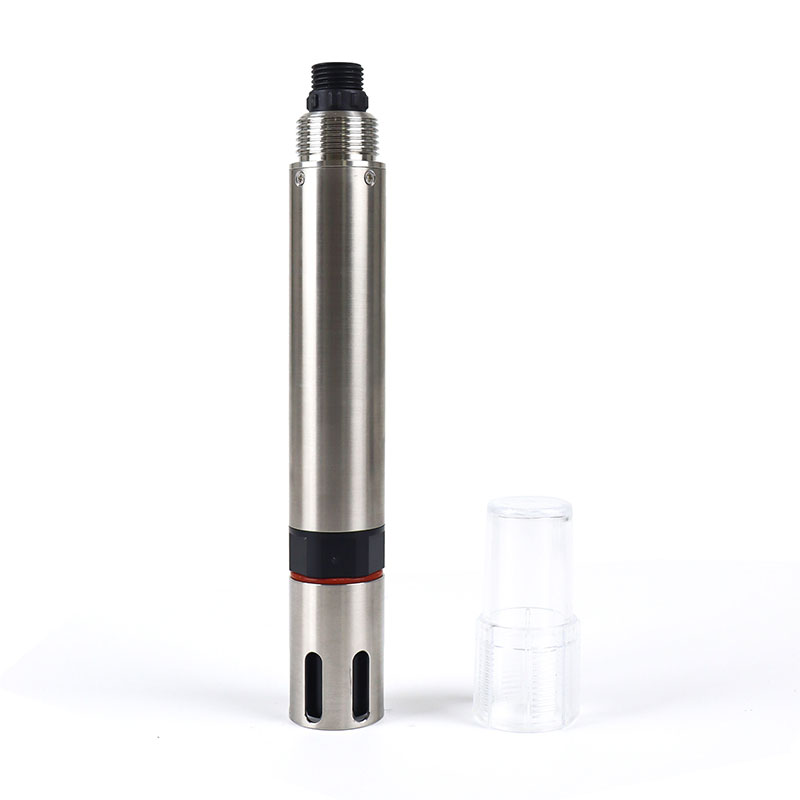
Model:FT-S2
Brand:fengtu
1. Water Hardness Meter Product Introduction
The S2Water Hardness Meter is made of calcium-magnesium selective electrodes based on PVC membranes and is used to test the total hardness of water (measured in CaCO3) with temperature compensation to ensure that the test is fast, simple, accurate and economical. This user manual details the technical parameters, use, maintenance and communication protocols of the total hardness sensor.
Signal output: RS-485 bus, ModbusRTU protocol, convenient for connection to third-party devices such as PLC, DCS, industrial control computers, general controllers, paperless recording instruments or touch screens.
Patented calcium and magnesium ion electrodes, the internal reference solution seeps out of the microporous salt bridge very slowly under a pressure of at least 100KPa (1Bar). Such a reference system is very stable, and the electrode life is longer than that of ordinary industrial electrodes.
Easy to install: 3/4NPT pipe thread, easy to install in pipelines and tanks.
IP68 protection grade.
2. Water Hardness Meter Technical Parameters
| Range and resolution | 0~1000.0mg/L; 0.1 |
| Accuracy | ±10% of reading; ±0.3℃ |
| Response time (T90) | <60s |
| Minimum detection limit | 0.9 (0-1000mg/L) |
| Calibration method | Two-point calibration |
| Cleaning method | / |
| Temperature compensation | Automatic temperature compensation (Pt1000) |
| Output method | RS-485(ModbusRTU), 4-20 mA (optional) |
| Storage temperature | -5~40℃ |
| Working conditions | 0~40℃, ≤0.2MPa, pH: 4~10 |
| Shell material | 316L |
| Installation | Submersible installation, 3/4 NPT |
| Power consumption | 0.2W@12V |
| powered by | 12~24VDC |
| Protection level | IP68 |
3. Water Hardness Meter Maintenance and Care
1. Use and maintenance
Before testing, the electrode should be immersed in tap water for 48 hours. After activation, it should be cleaned in deionized water. If the electrode is not used for a long time (more than two weeks), it should be stored dry, and the sensing element of the electrode should be put into the protective cap.
Check whether the terminal is dry. If there is any stain, wipe it with anhydrous alcohol and use it after drying. Avoid long-term immersion in distilled water or protein solution, and prevent contact with silicone grease. The PVC film of the electrode that has been used for a long time may become translucent or have sediment. In this case, it can be rinsed with distilled water (or deionized water). If the electrode has been used for a long time and measurement errors occur, it must be calibrated.
If the electrode cannot be calibrated and measured after being maintained and serviced in the above manner, it means that the electrode has failed. Please replace the electrode.
2. Sensor Calibration
Note: The sensor has been calibrated before leaving the factory. Do not calibrate it unless the measurement error is exceeded.
a) Zero point calibration
Place the sensor in the zero point standard solution, wait for 10 minutes, and after the value stabilizes, check whether the displayed value is within the error range. If not, zero point calibration is required. Refer to the appendix for calibration instructions.
b) Slope calibration
Place the sensor in the slope standard solution, wait for 10 minutes, and after the value stabilizes, check whether the displayed value is within the error range. If not, slope calibration is required. For calibration instructions, refer to the appendix.
The visibility detector can quickly transmit accurate fog information to the command center by monitoring the changes in visibility on expressways in real time, providing crucial basis for the decision-making of the traffic management department and completely changing the extensive management mode...
Portable Weather Station FT-BQX8. This is a high-precision automatic weather observation device produced by Fengtu Technology. It is highly integrated, low power consumption, and can be quickly installed, making it particularly suitable for field monitoring.It can simultaneously observe eight key en...
Handheld Weather Stations need continuous upgrades to better meet diverse meteorological monitoring needs. The FT-SQ6+ has been upgraded in multiple aspects compared to its predecessor, the FT-SQ5.First, it offers a richer set of measurement parameters. The FT-SQ6+ adds measurements of average wind...
Traditional weather stations are often large, fixed facilities established within standardized observation fields. They provide highly accurate data but come with high construction costs, long implementation cycles, and fixed locations. However, for field scientific expeditions, on-site rescue durin...


 Get a Free Quote
 Skype
Skype
 whatsapp
 mail
mail