Shandong Fengtu IOT Technology Co., Ltd
Sales Manager:Ms. Emily Wang
Cel,Whatsapp,Wechat:+86 15898932201
Email:info@fengtutec.com
Add:No. 155 Optoelectronic Industry Accelerator, Gaoxin District, Weifang, Shandong, China


Sales Manager:Ms. Emily Wang
Cel,Whatsapp,Wechat:+86 15898932201
Email:info@fengtutec.com
Add:No. 155 Optoelectronic Industry Accelerator, Gaoxin District, Weifang, Shandong, China
time:2024-12-03 09:11:21 source:Weather Station viewed:548 time
Drizzle is a precipitation phenomenon characterized by fine and gentle raindrops with a relatively small precipitation amount. The monitoring of rainfall is mainly achieved by measuring the precipitation amount per unit area within a unit of time.
Meteorologically, the precipitation amount is usually measured in millimeters (mm). For example, a precipitation amount of 1 millimeter is equivalent to 1 liter of water falling on an area of 1 square meter. Drizzle generally ranges from 0.1 to 2.5 millimeters per day.
There are various instruments available for monitoring the rainfall amount of drizzle.
The Stainless Steel Tipping Bucket Rain Gauge is a commonly used one. It consists of a receiving opening, a funnel, a tipping bucket, etc. When rainwater enters the tipping bucket and reaches a certain amount, the tipping bucket flips and triggers a signal to record the rainfall amount.
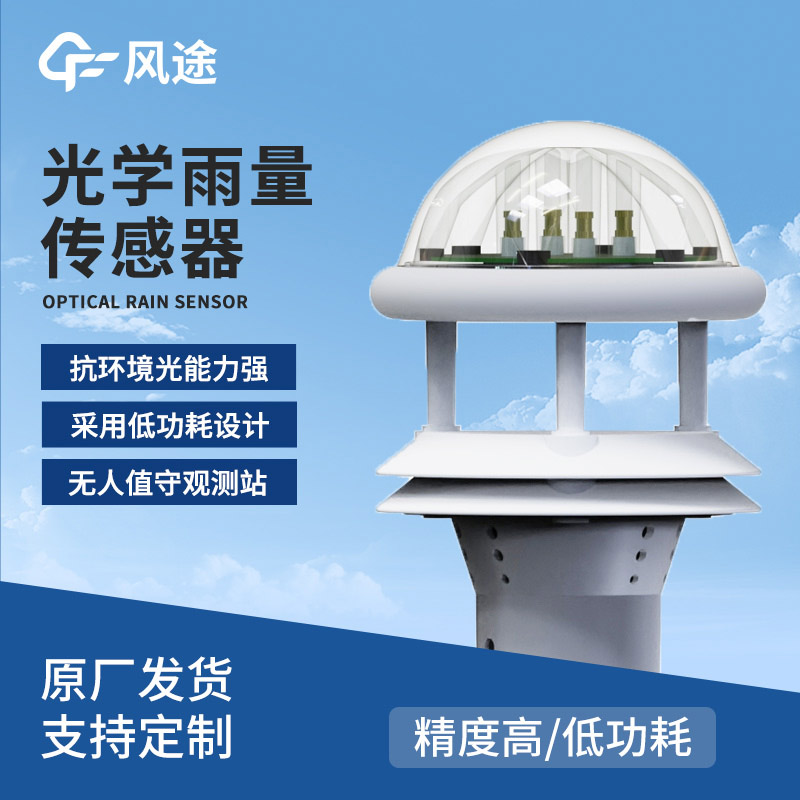
The Optical Rain Gauge can also be used for measurement. The Optical Rain Gauge is based on the optical principle. The light source and the sensor calculate the rainfall amount by analyzing the changes in light intensity caused by the refraction and scattering of light rays by raindrops. It is sensitive to the detection of drizzle, with non-contact measurement and relatively simple maintenance.
These types of rainfall monitors are all commonly used rain-measuring tools, each having its own advantages. It is recommended to purchase a rain gauge according to specific requirements.
Rain is a natural necessity, but excessive rainfall can bring about serious disasters. Urban waterlogging can lead to traffic paralysis, and floods can submerge streets and houses, posing a threat to life safety. Heavy rainfall in mountainous areas is likely to trigger mountain torrents, landslides...
In the field of road traffic, adverse weather conditions are like invisible "traffic killers", posing a huge threat to safe operations. Road surface water accumulation, thick snow, excessive rain and snowfall, or the frequent occurrence of extreme weather such as dense fog, thick fog, sand...
The Portable Weather Station is an important tool for modern environmental monitoring. It can simultaneously monitor parameters such as temperature, humidity, wind speed, wind direction, air pressure, illumination, PM2.5, PM10, noise, and rainfall. It adopts an ultrasonic wind speed and direction se...
Weather Instrument Shelter consists of three main components—the housing body, connecting brackets, and base—all fabricated from premium fiberglass. This design effectively overcomes the inherent drawbacks of traditional wooden Stevenson screens, such as susceptibility to rot and cracking, a...


 Skype
Skype
 whatsapp
 mail
mail