Shandong Fengtu IOT Technology Co., Ltd
Sales Manager:Ms. Emily Wang
Cel,Whatsapp,Wechat:+86 15898932201
Email:info@fengtutec.com
Add:No. 155 Optoelectronic Industry Accelerator, Gaoxin District, Weifang, Shandong, China


Sales Manager:Ms. Emily Wang
Cel,Whatsapp,Wechat:+86 15898932201
Email:info@fengtutec.com
Add:No. 155 Optoelectronic Industry Accelerator, Gaoxin District, Weifang, Shandong, China
time:2025-04-02 09:04:19 source:Weather Station viewed:584 time
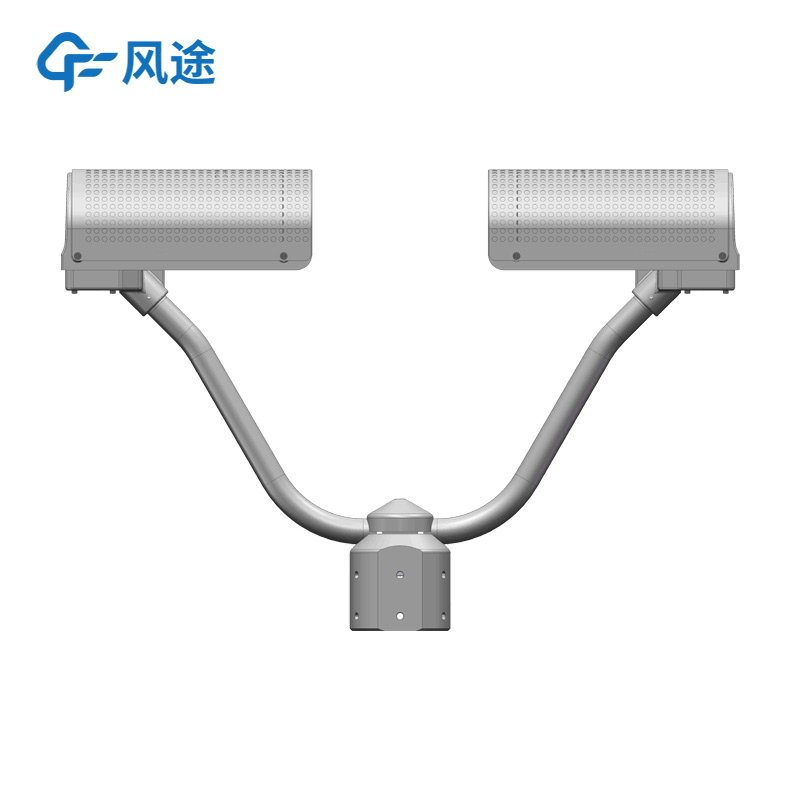
The YD1 Raindrop Sensor is an intelligent sensor that integrates precipitation particle spectrum monitoring and weather phenomenon identification. By actively emitting an infrared light band, the instrument can capture in real-time the changes in light energy when precipitation particles pass through the light band, and accurately calculate the falling speed and size distribution of the particles. Combining with empirical models, this device can automatically determine the types of precipitation (such as drizzle, rain, sleet, snow, hail, etc.), providing accurate data support for meteorological observations.
Technical Features:
Integrated design with a compact structure (660×450×120mm, weight ≤ 7kg), making it easy to install and deploy.
High environmental adaptability, with an operating temperature range from -40°C to 50°C and a protection level of IP65, capable of adapting to extreme climatic conditions.
Anti-pollution design. The transmitting and receiving ends are equipped with splash-proof covers to prevent precipitation particles from interfering with the sampling area.
Data visualization. Professional software can be optionally selected to display the raindrop spectrum distribution in a graphical form.
Calibration compatibility. A calibration device can be optionally selected to ensure the measurement accuracy during long-term operation.
Core Performance Parameters:
Particle size measurement range: 0.2-5mm for liquids and 0.2-25mm for solids.
Speed measurement range: 0.2-20m/s.
Measurement accuracy: ±5% for liquids and ±20% for solids.
Classification accuracy: 32-level particle size × 32-level speed matrix.
Precipitation intensity measurement range: 0-999mm/h.
Weather codes: Support WMO 4680/4677 or NWS standard output.
Data frequency: The default interval is 60 seconds, which can be customized and adjusted from 10 seconds to 60 minutes.
Electrical and Communication Performance:
Power supply requirements: DC 12-24V input.
Power consumption performance: ≤4W (24V) in non-heating mode and ≤80W (24V) in heating mode.
Communication interface: RS232/RS485 dual mode, compatible with various data acquisition systems.
Application Scenarios:
It is widely used in scientific research institutions, artificial weather modification operations, traffic meteorological monitoring, and disaster prevention and mitigation fields. By monitoring the type and intensity of precipitation in real-time, it provides a scientific basis for meteorological warnings, agricultural planning, and disaster prevention and control. It performs particularly well in complex precipitation weather, with an identification accuracy of precipitation types exceeding 90%.
In outdoor activity and work scenarios, the dynamic changes of the meteorological environment are directly related to personnel safety and task progress efficiency. Whether it is outdoor exploration, geological prospecting, agricultural field management, or emergency rescue, the outdoor weather is o...
In the modern transportation system, accurately grasping traffic conditions is crucial for ensuring travel safety and improving traffic efficiency. This relies on a series of advanced instruments, among which Weather Visibility Sensors, Road Condition Sensors, and Laser-based Snow Depth Sensors help...
In the meteorological monitoring network, regional Weather Monitoring Equipment plays an irreplaceable role, and the word "regional" precisely represents its key characteristics and value.Regional Weather Monitoring Equipment has clear geographical limitations, which is quite different fro...
In meteorological monitoring, accurate rainfall data is an important basis for the accuracy of weather forecasts. Traditional mechanical rain gauges have problems such as slow response, easy wear, and frequent maintenance, making it difficult to meet the needs of real-time and accurate rainfall moni...


 Skype
Skype
 whatsapp
 mail
mail