Shandong Fengtu IOT Technology Co., Ltd
Sales Manager:Ms. Emily Wang
Cel,Whatsapp,Wechat:+86 15898932201
Email:info@fengtutec.com
Add:No. 155 Optoelectronic Industry Accelerator, Gaoxin District, Weifang, Shandong, China


Sales Manager:Ms. Emily Wang
Cel,Whatsapp,Wechat:+86 15898932201
Email:info@fengtutec.com
Add:No. 155 Optoelectronic Industry Accelerator, Gaoxin District, Weifang, Shandong, China
time:2025-04-17 09:12:17 source:Weather Station viewed:459 time
Visibility is a crucial indicator in our daily lives and various production activities. From the safe takeoff and landing of aircraft in the aviation field to the navigation of ships in the vast ocean; from the smooth passage of vehicles on highways to the precise analysis of weather phenomena in meteorological research, accurate visibility observation is of great significance. Once the visibility decreases, such as in adverse weather conditions like smog, sandstorms, and heavy rain, the incidence of traffic accidents will rise, posing a huge threat to people's lives and property. Therefore, precisely measuring visibility has become a necessary prerequisite for ensuring the safe and efficient operation of numerous fields.
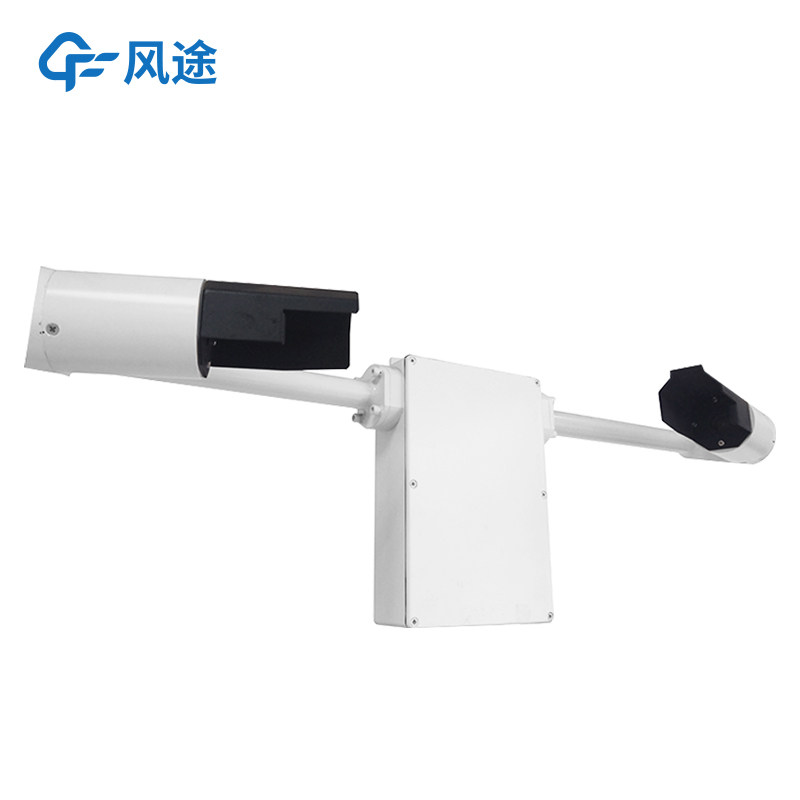
The FT-N80 Visibility sensor is dedicated to providing users with high-precision visibility monitoring data. This sensor employs the principle of 35° forward scattering, which makes its measurement results more accurate. Its measuring components include an optical lens and an infrared LED light source. The optical lens is designed to face downward and is equipped with a protective cover, which can effectively prevent precipitation, droplets, and dust from entering the lens, reducing the contamination of the probe surface. This not only ensures accurate measurement results but also reduces the maintenance frequency.
The sensor uses an infrared LED light source and adds a filter design, enhancing its ability to resist light source interference. The internal circuit has undergone anti-interference design and is also equipped with overvoltage and electromagnetic protection devices.
The measurement range of the FT-N80 Visibility sensor can reach 0 - 800,000m by default, with a resolution as high as 1m. The infrared light it uses has a wavelength of 870nm, and it can also read the cleanliness of the lenses at the infrared light emission and reception ends in real-time. The cleanliness level is divided into 1 - 5, with 5 representing the highest cleanliness. When the cleanliness is less than 3, the system will prompt on-site cleaning of the optical lens to maintain optimal measurement performance.
Currently, the FT-N80 Visibility sensor is widely applied in fields such as meteorological monitoring, traffic control, and environmental protection monitoring, providing reliable visibility data support for our daily lives and production activities, and facilitating the stable progress of various industries in complex and changeable environments.
This lamp uses a light source with wavelengths from 320nm to 680nm to attract pests. A fan then draws the insects into the collection box using negative pressure airflow, causing them to dry and dehydrate. It is solar-powered and operates normally even in rainy weather. A single lamp can cover...
The FT-WQX10B is an all-in-one anion sensor that integrates the monitoring of a wide range of meteorological elements, including anion, PM2.5, PM10, temperature, humidity, barometric pressure, oxygen content, noise, wind speed and wind direction. The highly integrated design of this sensor makes ins...
The scenic area meteorological station can achieve diversified monitoring functions through the all-round three-dimensional real-time monitoring of "land, sea and air". It can monitor multiple environmental parameters including air quality, water quality, noise level, temperature, humidity...
The atmospheric electric field monitor measures atmospheric electric field strength in real-time, based on the principle of induced charges in conductors. It features a measurement range of -100 kV/m to +100 kV/m, an accuracy of ±0.001% F.S., and a response time of 3 seconds. Utilizing Modbus...


 Skype
Skype
 whatsapp
 mail
mail