Shandong Fengtu IOT Technology Co., Ltd
Sales Manager:Ms. Emily Wang
Cel,Whatsapp,Wechat:+86 15898932201
Email:info@fengtutec.com
Add:No. 155 Optoelectronic Industry Accelerator, Gaoxin District, Weifang, Shandong, China


Sales Manager:Ms. Emily Wang
Cel,Whatsapp,Wechat:+86 15898932201
Email:info@fengtutec.com
Add:No. 155 Optoelectronic Industry Accelerator, Gaoxin District, Weifang, Shandong, China
time:2026-06-23 10:39:23 source:Weather Station viewed:3 time
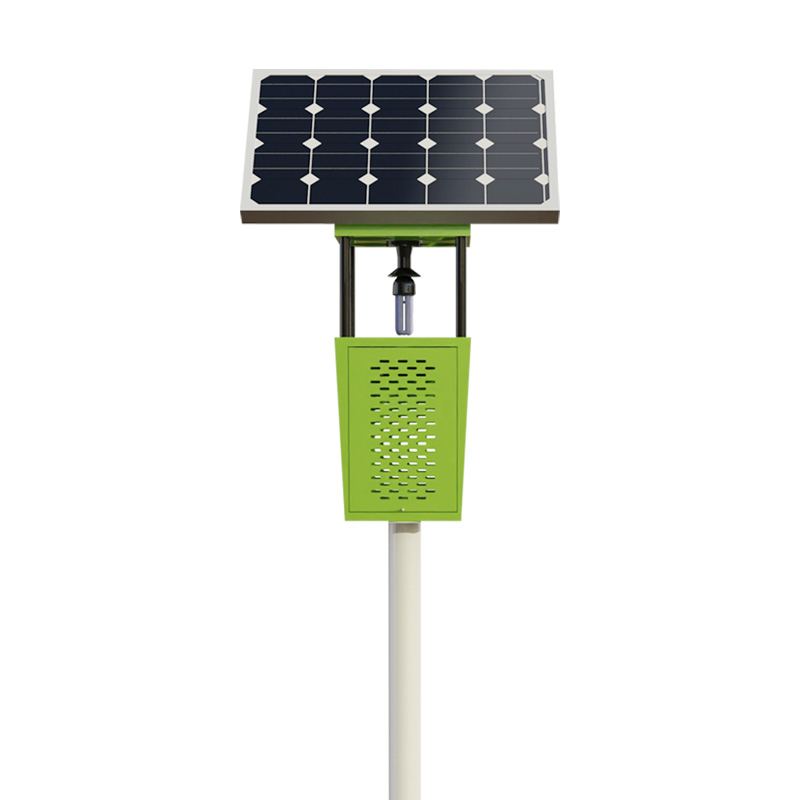
The price of solar insecticidal lamps varies considerably depending on the type, power, and functions. Basic models range from approximately 100 to 400 yuan, while specialized agricultural equipment typically ranges from 800 to 2800 yuan. For example, in the FT series, the FT-FD1 is priced at 1500 yuan, the FT-FD2 at 2000 yuan, the FT-FD1S at 2200 yuan, and the FT-FD2S at 2500 yuan.
The price of solar insecticidal lamps varies considerably depending on the type, power, features, and quantity purchased. Understanding the price range of different models helps users make informed choices based on their planting area, pest species, and budget. Overall, the market price of solar insecticidal lamps ranges from a little over 100 yuan to nearly 3000 yuan.
Basic models are mainly aimed at home backyards or small-area applications. Electric solar insecticidal lamps typically have a power of 10W to 30W and are generally priced between 100 and 300 yuan. Basic frequency-vibration solar insecticidal lamps have relatively simple functions and are priced between 200 and 400 yuan. These products are suitable for small-scale planting or home gardening, meeting basic insecticidal needs, but their coverage area and insecticidal efficiency are relatively limited.
Specialized equipment for agricultural production is significantly more expensive. Electric solar insecticidal lamps for agricultural production or large-scale use have a power of 30W or higher and are generally priced between 800 and 2000 yuan. Intelligent frequency-vibration solar insecticidal lamps have multiple functions such as light control, rain control, and timer, and are typically priced between 500 and 1000 yuan. Wind-suction solar insecticidal lamps are generally priced between 500 and 1000 yuan, while products used in large-scale agricultural planting bases may cost between 800 and 1000 yuan. In specific procurement cases, one project purchased 50 wind-suction solar insecticidal lamps at a price of 2800 yuan each (including delivery and installation), while another project purchased landscape-style solar insecticidal lamps at a unit price of 1387.51 yuan.
Taking specific models from Fengtu Technology as an example, the price gradient for different configurations is clear. The FT-FD1 is the basic model, with a reference price of 1500 yuan. The FT-FD2 upgrades the insect-attracting light source or battery capacity, priced at 2000 yuan. The FT-FD1S adds intelligent control or network connectivity, priced at 2200 yuan. The FT-FD2S is an enhanced network-connected model, supporting remote viewing of device status and insect-killing data, priced at 2500 yuan. These four models cover a complete product line from basic to high-end, allowing users to choose according to their actual needs.
When purchasing solar insecticidal lamps, in addition to considering the price of the equipment itself, additional costs such as transportation, installation, and warranty should also be taken into account. Government procurement projects typically require quotations to include the cost of goods, packaging, transportation, taxes, and all costs during the warranty period. Some projects also require bidders to provide a complete product package including installation and a 3-year free warranty. Bulk purchases usually yield more favorable prices; it is recommended to contact the manufacturer directly for negotiation. Meanwhile, attention should be paid to the equipment's protection level, solar panel power, battery capacity, and other hardware parameters, as these directly determine the equipment's durability and pest control effectiveness in field environments. Although networked equipment has a higher unit price, it provides remote monitoring and data analysis, facilitating unified management of large-scale planting bases and reducing manual inspection costs in the long run.
According to the relevant regulations of the "Good Manufacturing Practice for Pharmaceuticals" (GMP) and the "Good Supply Practice for Pharmaceuticals" (GSP), drugs that are prone to deterioration in high-temperature environments must be stored in a low-temperature environment of...
BeiDou Environmental Monitoring Station integrates regional short message communication technologies from the BeiDou-2 and BeiDou-3 satellite systems with hydrological and environmental monitoring technologies to achieve 24-hour uninterrupted autonomous operation, real-time data transmission,...
On the rooftops of distributed photovoltaic power stations and between small photovoltaic arrays, a compact and sophisticated monitoring device is often seen – this is the PV Weather Station. With its small size, flexible deployment, and precise monitoring capabilities, it provides reliable data fo...
A "natural oxygen bar" is a treasured place bestowed by nature upon humanity, where the air is exceptionally fresh and rich in a high concentration of negative oxygen ions.Negative oxygen ions can be regarded as the "vitamins" in the air. After entering the human body through the...


 Skype
Skype
 whatsapp
 mail
mail