Shandong Fengtu IOT Technology Co., Ltd
Sales Manager:Ms. Emily Wang
Cel,Whatsapp,Wechat:+86 15898932201
Email:info@fengtutec.com
Add:No. 155 Optoelectronic Industry Accelerator, Gaoxin District, Weifang, Shandong, China


Sales Manager:Ms. Emily Wang
Cel,Whatsapp,Wechat:+86 15898932201
Email:info@fengtutec.com
Add:No. 155 Optoelectronic Industry Accelerator, Gaoxin District, Weifang, Shandong, China
time:2025-02-27 08:55:56 source:Weather Station viewed:491 time
In agricultural production, diseases pose a serious threat to the growth of crops, which is related to both yield and quality. Spores play a crucial role in agricultural disease monitoring, and the Spore Catcher is a powerful tool for monitoring spores.
Spores: The "Early Warning Signal" of Agricultural Diseases
Many crop diseases are caused by the spread of pathogen spores, such as wheat rust and northern corn leaf blight. Spores are small in size and light in weight, and can disperse in large quantities in the air. Once the environment is suitable, they will infect crops.
Spores can play an early warning role. Before crops get sick, by monitoring the changes in the types and quantities of spores, potential disease risks can be detected. The spores of different pathogens have different characteristics, and based on this, the types of pathogens can be determined, and the diseases can be accurately diagnosed, providing a basis for precise prevention and control.
Continuous monitoring of the concentration, distribution, and diffusion direction of spores helps to understand the transmission rules of pathogens. For example, in areas with strong winds, spores can spread far, and the farmland downwind can be prevented in advance. The number of spores is positively correlated with the severity of the disease. Regularly monitoring the number of spores can assess the development trend of the disease and adjust the prevention and control strategies in a timely manner. According to the spore monitoring data, the timing, methods, and pesticides for prevention and control can also be determined.
Spore Catcher: The "Smart Assistant" for Spore Monitoring
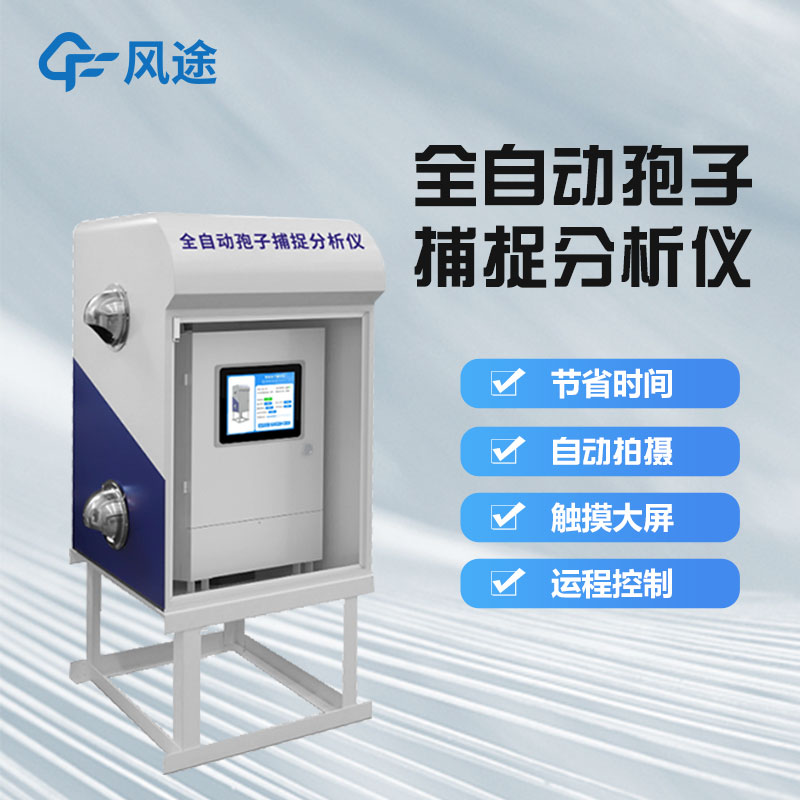
The Spore Catcher is a professional instrument for monitoring pathogen spores, integrating technologies such as aerodynamics and optical microscopic imaging. The instrument generates negative pressure through an air-driven device, draws in air to capture spores, and then uses a high-resolution microscope or an optical imaging system to take pictures, clearly showing the characteristics of the spores.
It can automatically capture spores and take pictures 24 hours a day, reducing the burden of manual work. With a high-pixel camera and a high-power microscope, the spore images taken are clear. It supports multiple communication methods, allowing remote viewing of images and data, and can also remotely control the device parameters. The intelligent instrument has an intelligent statistical analysis function, automatically identifying and counting spores, and generating reports and charts. It can also set the working period according to the habits of pathogens, and has functions such as rain control and lightning protection, adapting to the field environment.
This instrument is widely used in agriculture, forestry, animal husbandry, and other fields where spore diseases are likely to occur.
In recent years, the construction of high-standard farmland has achieved remarkable results, with its core being "turning small plots into large ones" and "transforming grain fields into fertile ones". In the past, farmland fragmentation was severe, with ridges crisscrossing each...
In the field of modern agriculture, with the popularization of precision agriculture and smart agriculture concepts, there is an increasing demand for quantitative management and scientific decision-making in agricultural production environments. Agrometeorological stations have emerged as automated...
Lightning Warning System uses an atmospheric electric field sensor as its core to monitor changes in the electric field from -100kV/m to +100kV/m and predict thunderstorm trends in real time. It serves aerospace, power, petrochemical, and scenic areas, providing crucial early warning information for lightning protection....
In the field of agricultural production, the 14 - element Agricultural Meteorological Stations mainly consist of meteorological sensors, collectors, solar power supply systems, pole brackets, and cloud platforms. Meteorological sensors are responsible for sensing and measuring various meteorological...


 Skype
Skype
 whatsapp
 mail
mail