Shandong Fengtu IOT Technology Co., Ltd
Sales Manager:Ms. Emily Wang
Cel,Whatsapp,Wechat:+86 15898932201
Email:info@fengtutec.com
Add:No. 155 Optoelectronic Industry Accelerator, Gaoxin District, Weifang, Shandong, China


Sales Manager:Ms. Emily Wang
Cel,Whatsapp,Wechat:+86 15898932201
Email:info@fengtutec.com
Add:No. 155 Optoelectronic Industry Accelerator, Gaoxin District, Weifang, Shandong, China
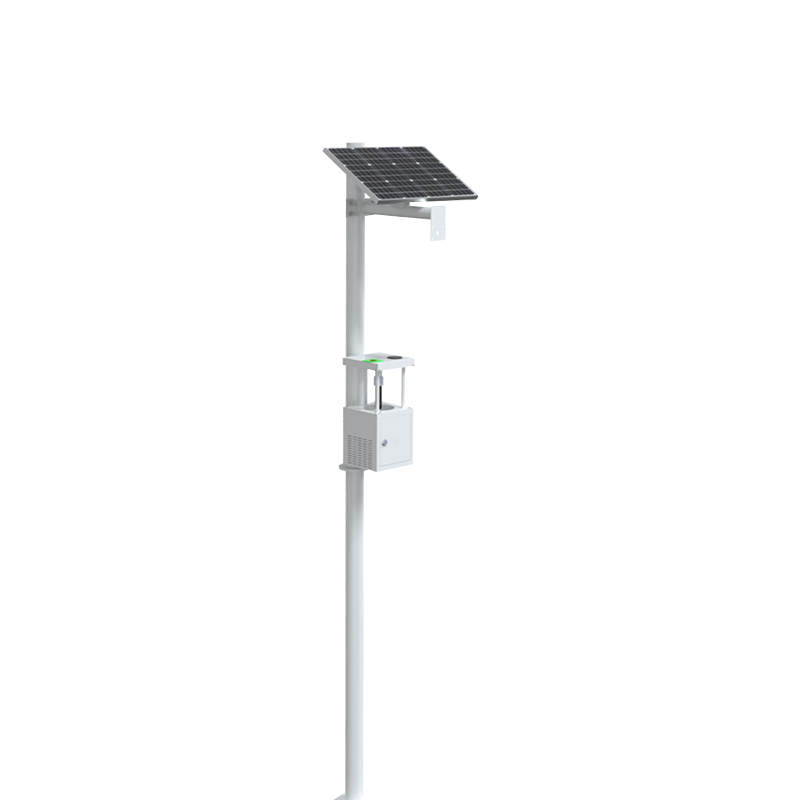
Model:FT-FD1
Brand:fengtu
1.Solar insecticidal lamp product overview
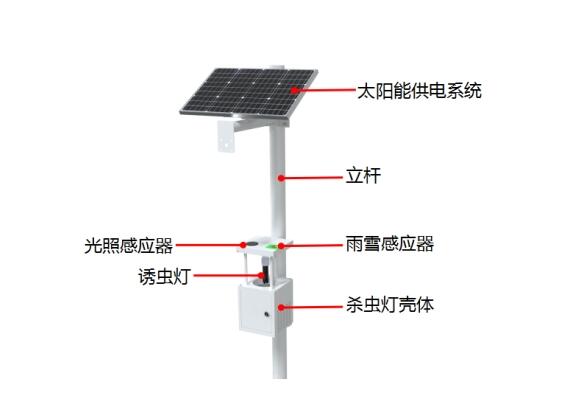
Solar insecticidal lamp is a physical insecticidal device that uses light waves to lure adult pests to the lamp, and then the fan rotates to generate negative pressure airflow to suck the insects into the collector, so that they can be air-dried and dehydrated to achieve the purpose of killing insects. The wind-suction insecticidal lamp developed by our company has improved the light source and insecticidal method, breaking through the ability to kill small pests with conventional insecticidal lamps, and greatly improving the efficiency of killing pests. The device uses solar panels as power supply, stores power during the day, and provides power for the insecticidal lamp at night to lure pests to the light source. The product consists of an insect-attracting light source, an insecticidal component, an insect-collecting component, a supporting component, etc. It has the characteristics of simple structure, easy installation, strong operability, a variety of insecticidal species, a wide range of insecticidal, safety, environmental protection, and non-toxicity. This product is widely used in agriculture, forestry, warehousing, fish ponds, etc., and can effectively prevent various lepidopteran pests.
2. Solar insecticidal lamp features
1. The device is in standby mode during the day, and uses sunlight intensity and rainfall to control whether the device is working. If it detects rainfall or it is in daytime, the device is in standby mode; if it detects no rain and it is dark, the device works normally.
2. It uses a multi-spectrum insect-attracting light source with a wavelength of 320nm-680nm, which can trap multiple types of pests at the same time.
3. The use of high-power fans can greatly increase the number and efficiency of flukes.
4. Use new polycrystalline solar panels with high energy conversion rate and environmental protection.
3. Solar insecticidal lamp technical parameters
| Light source parameters | wavelength | 320nm-680nm |
| power | 15W | |
| Solar panel parameters | power | 30W |
| size | 505*430mm | |
| Fan parameters | powered by | 12V |
| power | 4W | |
| Actual power of the whole machine | ≤15W | |
| Pole parameters | diameter | 76mm |
| length | 3m | |
| Data upload method | single vision | |
| Service life | ≥ 3 years | |
| Solar power system life | Continuous rainy days for 2 to 3 days | |
4. Solar insecticidal lamp product size diagram
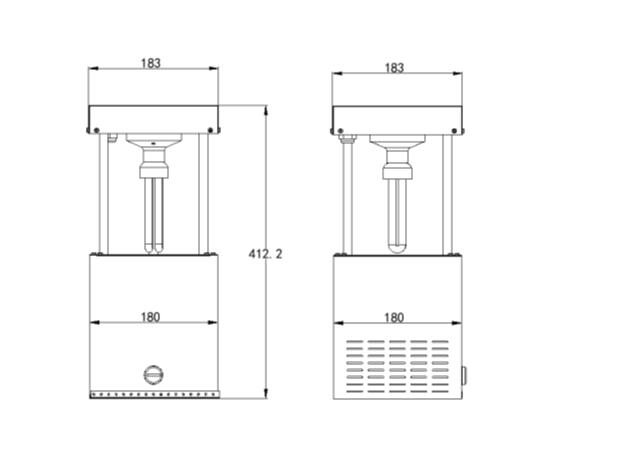
5. Solar insecticidal lamp product structure diagram
The compact weather station is a dedicated device focused on meteorological data collection. Characterized by easy installation, simple operation, high measurement accuracy, and integration of multiple meteorological elements, it is highly favored by meteorological researchers and has become their p...
In meteorological observation and environmental monitoring, visibility is a key indicator, which is of great significance to traffic safety, navigation operations, and meteorological research. The Fengtu FT-N10A2 Visibility Sensor features a stainless steel body design, allowing it to be used with c...
A Spore Catcher is a device used to monitor and analyze pathogenic spores in the air. It consists of a high-power optical microscopy imaging system, precision limit technology, automatic intelligent focusing fusion technology, and IoT transmission control technology. Utilizing optoelectronic and num...
In our daily life, we often encounter severe weather such as haze and patchy fog. During these times, the atmospheric visibility is extremely low, just like a veil covering our eyes. It's a very unpleasant feeling, and such conditions are also prone to causing traffic accidents. So, is there a w...


 Get a Free Quote
 Skype
Skype
 whatsapp
 mail
mail