Shandong Fengtu IOT Technology Co., Ltd
Sales Manager:Ms. Emily Wang
Cel,Whatsapp,Wechat:+86 15898932201
Email:info@fengtutec.com
Add:No. 155 Optoelectronic Industry Accelerator, Gaoxin District, Weifang, Shandong, China


Sales Manager:Ms. Emily Wang
Cel,Whatsapp,Wechat:+86 15898932201
Email:info@fengtutec.com
Add:No. 155 Optoelectronic Industry Accelerator, Gaoxin District, Weifang, Shandong, China
time:2026-02-11 10:18:47 source:Weather Station viewed:308 time
Online monitoring system for power transmission lines system is primarily installed on power transmission towers to monitor local meteorological parameters such as wind speed, wind direction, temperature, and humidity in real-time along the transmission line corridor. Designed for complex terrain, this system effectively monitors the operating environment of the transmission line and its corridor.
Online monitoring system for power transmission lines system is a specialized device for continuous observation of the local micro-meteorological environment along transmission line corridors. Typically installed on power transmission towers in representative locations, it aims to acquire real-time meteorological data for the area, providing environmental information support for line operation, maintenance, and disaster early warning.
The system integrates multiple high-precision sensors to simultaneously measure key meteorological elements. Its continuously monitored wind speed and direction data directly affect wind load calculations and wind-induced flashover risk assessments. Measurements of air temperature and humidity help analyze conductor current-carrying capacity and icing conditions. Air pressure data serves as a reference for environmental correction. Furthermore, the system is equipped with tipping bucket or optical rain gauges to record rainfall intensity and accumulation, providing a basis for assessing insulator flashover risk and the impact of flash floods and geological disasters on the tower foundation.
The system's design fully considers the geographical characteristics of transmission lines, which are widely distributed and mostly traverse complex terrain. The equipment adopts an industrial-grade design, possessing wide-temperature operating capabilities and good electromagnetic compatibility to adapt to harsh environments such as high and low temperatures, humidity, and lightning strikes. Its power supply typically employs a combination of solar power and batteries to ensure long-term stable operation in areas without mains power. Data is transmitted back via wireless communication networks (such as 4G/5G or private networks) to achieve centralized management of widely distributed monitoring points.
By continuously collecting corridor meteorological data, the system achieves indirect and effective monitoring of the operating environment of the line itself, the corridor, and the tower foundation. For example, by combining wind speed and direction with line sag models, the safe distance between the conductor and the ground or crossings can be assessed under high wind conditions. Analyzing continuous temperature and humidity data helps predict the condensation and contamination process on insulator surfaces. Combining rainfall and topographic data can assist in assessing the soil and water stability of the slopes surrounding the tower foundation.
The monitoring center platform stores, analyzes, and visualizes the received data. Maintenance personnel can remotely view real-time meteorological information and historical change curves for each monitoring point. The system supports threshold alarm functionality. When abnormal meteorological conditions such as excessive wind speed or short-term heavy rainfall are detected, it can automatically issue early warning information, prompting maintenance personnel to pay attention to the operational safety of the relevant sections of the line.
The deployment and application of this system partially transforms the traditional manual inspection and reactive approach into a preventative maintenance model based on real-time data. It extends the perception capabilities of maintenance personnel, enabling more timely and accurate control over the micro-meteorological environment of distributed power lines, thus becoming an important technical foundation for building intelligent power transmission networks and improving the resilience of power lines to natural disasters.
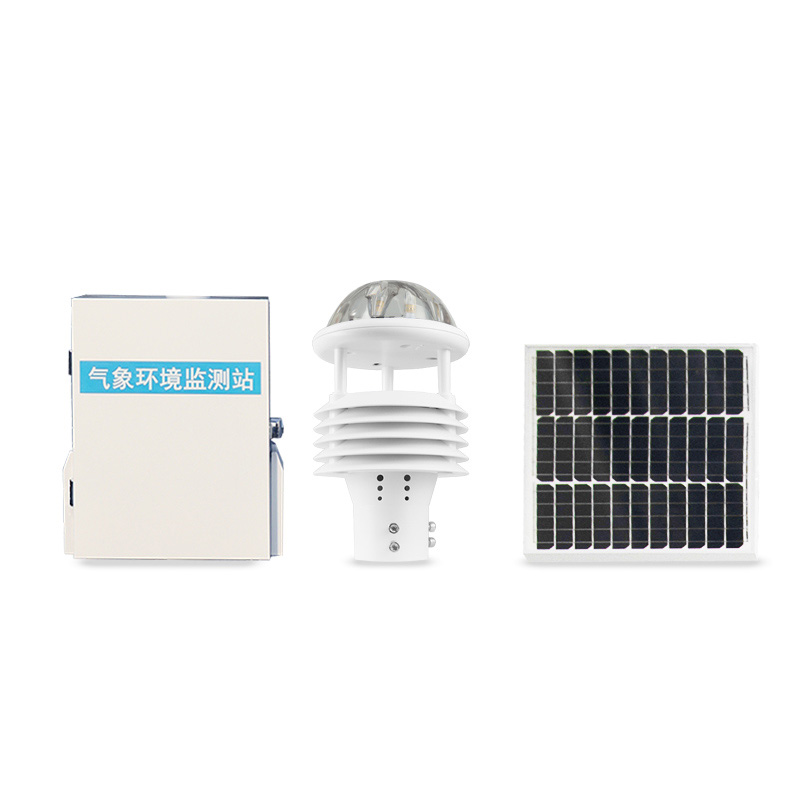
Specifically developed for monitoring the local meteorological environment along transmission tower corridors, the system collects parameters such as wind speed, wind direction, temperature, humidity, air pressure, and rainfall in real time. This data is transmitted to the monitoring center vi...
A Portable Weather Station for firefighting is a lightweight and multi-functional weather monitoring device specially designed for fire rescue scenarios. It is mainly used to monitor the meteorological conditions at the fire scene in real-time, helping firefighters assess the development trend of th...
Precipitation is a key component of the hydrological cycle. Accurate and timely rainfall data has irreplaceable value for water resource management, flood disaster warning, agricultural irrigation, and climate research. Traditional manual rainfall measurement methods have limitations in timeliness,...
In modern society, the Weather Station Monitoring System is of great importance. It is a comprehensive system integrating multiple technologies and devices, capable of real-time and accurate monitoring and analysis of various meteorological elements and related environmental parameters in the atmosp...


 Skype
Skype
 whatsapp
 mail
mail