Shandong Fengtu IOT Technology Co., Ltd
Sales Manager:Ms. Emily Wang
Cel,Whatsapp,Wechat:+86 15898932201
Email:info@fengtutec.com
Add:No. 155 Optoelectronic Industry Accelerator, Gaoxin District, Weifang, Shandong, China


Sales Manager:Ms. Emily Wang
Cel,Whatsapp,Wechat:+86 15898932201
Email:info@fengtutec.com
Add:No. 155 Optoelectronic Industry Accelerator, Gaoxin District, Weifang, Shandong, China
time:2026-02-06 11:11:08 source:Weather Station viewed:377 time
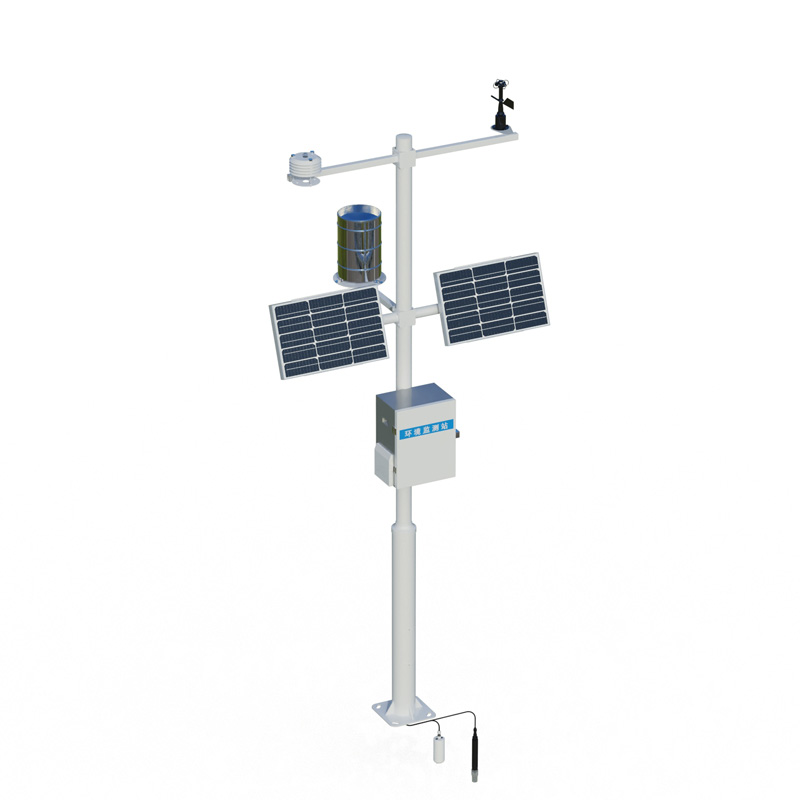
The Agricultural Environment Monitoring System system consists of five parts: weather sensors, data collector, solar power system, mounting pole, and cloud platform. It can comprehensively monitor key meteorological elements such as temperature, humidity, wind speed, and light intensity, building a comprehensive monitoring and early warning platform covering farmland, greenhouses, livestock farms, orchards, and tea plantations, supporting remote real-time monitoring by users.
Agricultural Environment Monitoring System is a comprehensive environmental data acquisition and analysis platform designed specifically for modern agriculture. Based on an Internet of Things (IoT) technology architecture, its core objective is to achieve continuous, automatic monitoring of meteorological environments in farmland, facility agriculture, and various production areas, and transmit the data to the cloud in real time, allowing managers to remotely view and analyze the data, providing a scientific basis for agricultural production decisions.
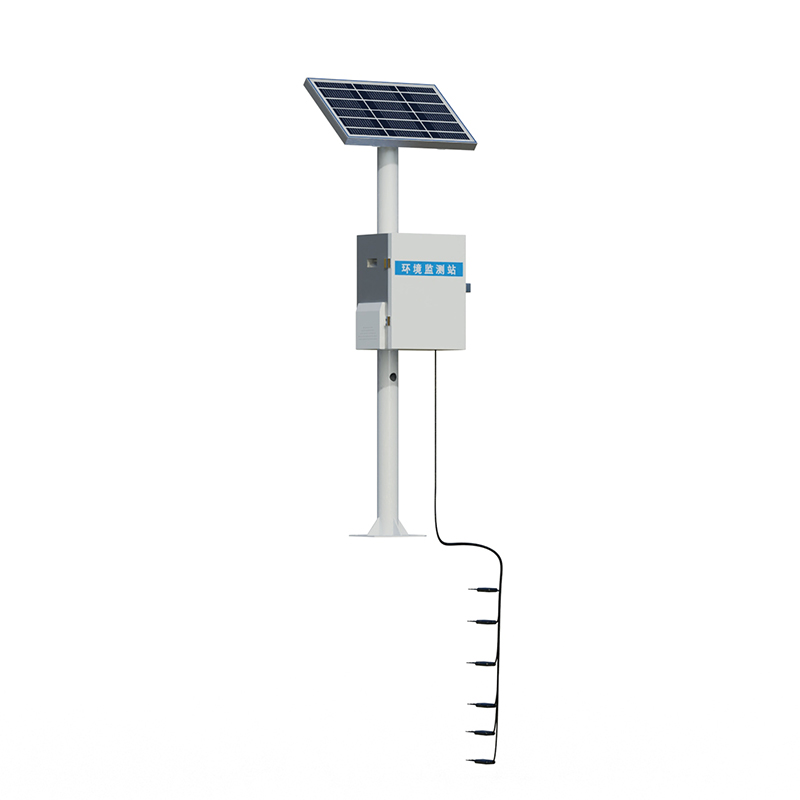
The system typically consists of five basic physical components working together. First are various meteorological sensors, responsible for collecting key parameters such as air temperature, air humidity, wind speed, wind direction, light intensity, rainfall, and soil temperature and humidity. These sensors have agricultural-grade measurement accuracy and reliability. Second is the data collector, which collects signals from the sensors, performs preliminary processing and storage, and acts as a communication hub. Third is the solar power system and battery, providing stable energy for long-term operation of the equipment in the field. Fourth is the mounting pole, used to securely install sensors, data collectors, and other equipment at appropriate heights and locations. Fifth is the cloud platform, which is the data center and display interface of the system, responsible for receiving, storing, and processing data, and presenting it to users in the form of charts and other visualizations.
In terms of specific functions, the system can achieve 24/7 continuous and comprehensive environmental monitoring. Meteorological changes within the sensor network coverage area are recorded in real time, and the data is transmitted to the cloud platform via a wireless communication network. Users can log in to the platform anytime, anywhere via a computer webpage or mobile application to view current data, historical curves, and equipment status. When any monitored parameter exceeds the preset safety or optimal threshold, the system can automatically send early warning messages to designated managers through platform alerts, SMS messages, etc.
The system has a wide range of applications. It can be deployed in open field crop areas to monitor macro-climate conditions and guide irrigation, fertilization, and pest and disease control. In greenhouses, it can precisely monitor the internal micro-environment and联动 (linkage) with equipment such as film rolling, ventilation, and supplemental lighting to achieve precise control. In livestock farms, monitoring environmental parameters helps prevent heat or cold stress in animals. In orchards, tea plantations, medicinal plant bases, and other economic crop areas, the system helps record and analyze key meteorological factors that affect crop quality. It forms a three-dimensional monitoring and early warning network covering various agricultural sectors.
Therefore, Agricultural Environment Monitoring System, through the combination of hardware networking and a software platform, transforms dispersed environmental information into centralized, visualized, and analyzable data assets. It effectively solves the problems of traditional agriculture's reliance on manual inspections, incomplete data recording, and delayed responses, improving the digitalization and intelligence level of agricultural environmental management. It is an important technological tool for promoting the development of smart agriculture and ensuring the safety and efficiency of agricultural production.
In the current era when the concepts of ecotourism and healthy living are widely spread, natural oxygen bars have become popular leisure destinations for people. As a key facility for measuring and maintaining the ecological quality of these areas, the Environmental Monitoring Station demonstrates t...
This integrated sensor unit for temperature, humidity, wind speed, wind direction, and air pressure utilizes ultrasonic probes to measure wind speed and direction, complemented by a diode junction voltage method for temperature measurement and capacitive elements for humidity sensing. All meas...
The Small automatic weather station can collect meteorological data in real time, which is crucial for meteorological research and disaster prevention. Now, let's introduce its installation method to you.Preparation before InstallationFirst of all, select a suitable site. Choose an open and flat...
Waterway visibility detection is a crucial aspect of ensuring water transportation safety. On river waterways, especially in mountainous river sections, abundant water vapor conditions easily form heavy fog, posing serious threats to ship navigation. During poor visibility conditions, ports are ofte...


 Skype
Skype
 whatsapp
 mail
mail