Shandong Fengtu IOT Technology Co., Ltd
Sales Manager:Ms. Emily Wang
Cel,Whatsapp,Wechat:+86 15898932201
Email:info@fengtutec.com
Add:No. 155 Optoelectronic Industry Accelerator, Gaoxin District, Weifang, Shandong, China


Sales Manager:Ms. Emily Wang
Cel,Whatsapp,Wechat:+86 15898932201
Email:info@fengtutec.com
Add:No. 155 Optoelectronic Industry Accelerator, Gaoxin District, Weifang, Shandong, China
time:2026-02-03 10:11:41 source:Weather Station viewed:309 time
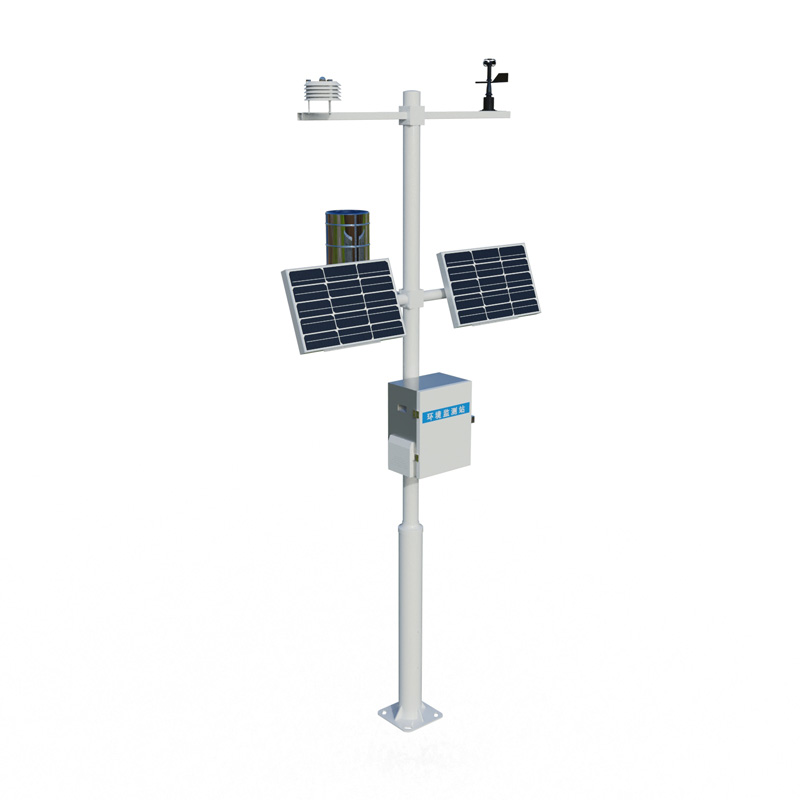
Automatic meteorological observation system consists of sensors, a data collector, a power supply system, a support structure, and a cloud platform, capable of automatically and continuously collecting data such as temperature, humidity, pressure, wind, and precipitation. This system requires no debugging and allows for rapid deployment, providing real-time monitoring information for meteorological, environmental, aviation, and agricultural fields.
Automatic meteorological observation system is an integrated outdoor environmental monitoring device that automatically, continuously, and in real-time collects data on various meteorological elements. The system typically consists of five basic components: meteorological sensors, a data collector, a solar power supply system, a pole support structure, and a cloud platform. Its design emphasizes ease of deployment, featuring no-debugging and rapid setup capabilities, enabling 24-hour continuous online monitoring of outdoor meteorological parameters.
The system's core functionality relies on various meteorological sensors. These sensors are responsible for directly sensing changes in the atmospheric environment, accurately measuring key meteorological parameters including atmospheric pressure, temperature, humidity, wind speed, wind direction, and precipitation. The data collector, acting as the system's processing center, periodically collects raw electrical signals from each sensor, converts them into digital information, and performs initial quality checks and processing. The processed data is then transmitted to a remote cloud platform or data center via a built-in communication module using wired or wireless networks.
The solar power supply system and pole support structure provide physical and energy support for the stable operation of the entire system in the field. The combination of solar panels and batteries ensures long-term uninterrupted operation even without mains power. The sturdy pole support structure elevates the sensors to the specified height to meet meteorological observation standards and protects the ground equipment. The cloud platform is responsible for data reception, storage, display, and analysis, allowing users to remotely access real-time data and historical records via a web browser or dedicated software.
Automatic meteorological observation system plays a fundamental role in many fields that rely on accurate and timely meteorological information. In weather forecasting, it forms the basis of a high-density ground observation network, providing initial field data for numerical weather prediction models and real-time data for short-term forecasts and warnings. In climate monitoring and research, the long-term continuous data series provided by the system is an important basis for analyzing climate change trends and evaluating extreme weather events.
Environmental monitoring and research also rely on such systems. Meteorological parameters are closely related to air quality and ecological indicators, and continuous meteorological data helps analyze pollutant dispersion conditions and assess the evolution of the ecological environment. In the aviation sector, automatic observation systems deployed at airports and along flight routes provide real-time wind, temperature, pressure, visibility, and other critical decision-making information for aircraft takeoffs, landings, and flight safety. In agricultural applications, the system's data is used to guide precision irrigation, pest and disease control, agricultural facility management, and disaster weather prevention, helping to improve agricultural production efficiency and resilience against risks.
This system achieves full automation from data acquisition and processing to transmission, significantly reducing the cost and errors of manual observation and improving the spatiotemporal resolution and availability of data. Its modular design and standardized interfaces also facilitate function expansion and maintenance. Automatic meteorological observation system has become an indispensable basic technological infrastructure in modern meteorological services, environmental management, and related industry operations.
Low-visibility weather conditions such as fog, haze, precipitation, and sandstorms not only cause great inconvenience to travel but also frequently trigger major accidents, leading to severe casualties and economic losses. However, the existing Doppler weather radars in meteorological and environmen...
What are the negative oxygen ion monitoring equipment? What is the role? In daily life, we often hear terms such as "negative oxygen ions". So what are these? Let's find out below!...
I. FT-BN10 Handheld Visibility DetectorTechnical Principle: It measures the total extinction coefficient of the air by using the forward scattering method, and thus calculates the current visibility.AdvantagesPortable and easy to use. With an integrated portable design, it is lightweight, convenient...
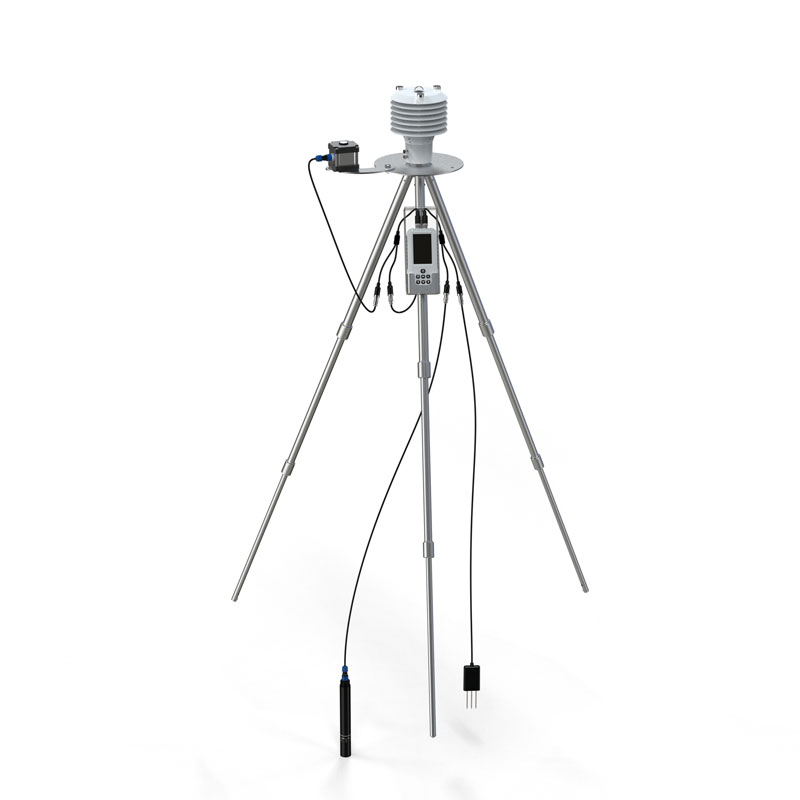
The Portable Weather Station is an important tool for modern environmental monitoring. It can simultaneously monitor parameters such as temperature, humidity, wind speed, wind direction, air pressure, illumination, PM2.5, PM10, noise, and rainfall. It adopts an ultrasonic wind speed and direction se...


 Skype
Skype
 whatsapp
 mail
mail