Shandong Fengtu IOT Technology Co., Ltd
Sales Manager:Ms. Emily Wang
Cel,Whatsapp,Wechat:+86 15898932201
Email:info@fengtutec.com
Add:No. 155 Optoelectronic Industry Accelerator, Gaoxin District, Weifang, Shandong, China


Sales Manager:Ms. Emily Wang
Cel,Whatsapp,Wechat:+86 15898932201
Email:info@fengtutec.com
Add:No. 155 Optoelectronic Industry Accelerator, Gaoxin District, Weifang, Shandong, China
time:2026-01-26 10:38:04 source:Weather Station viewed:317 time
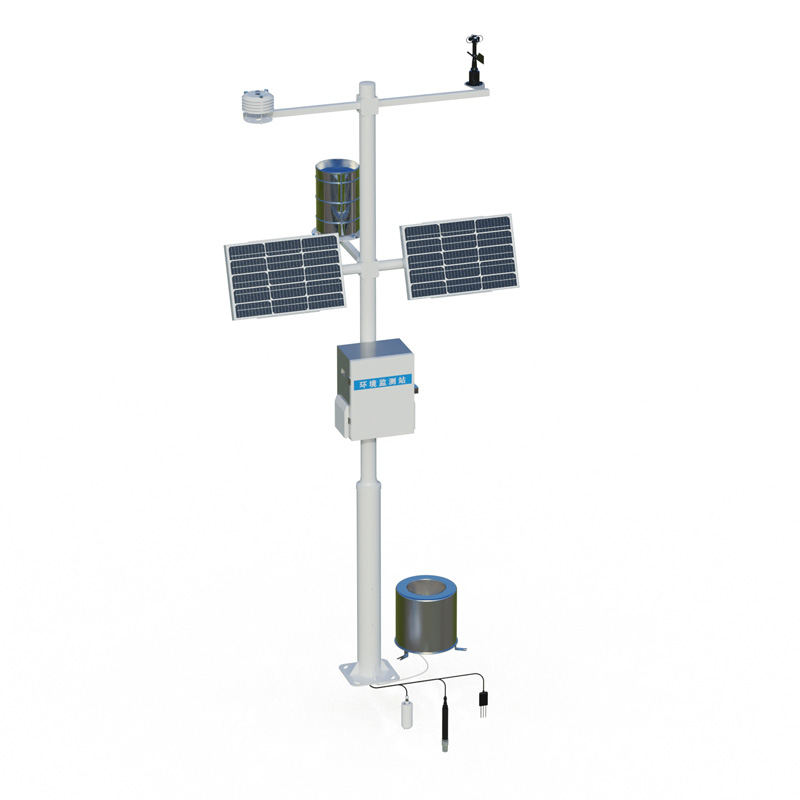
The price of Agricultural Weather Stations typically ranges from 7200 to 12000 RMB. Before purchasing, it's crucial to clarify your specific monitoring needs. The device integrates multiple sensors for real-time collection of field meteorological data, and the price difference mainly stems from the configuration and functions.
Agricultural Weather Stations is an automated monitoring device integrating multiple environmental sensors, primarily used for real-time and continuous collection of meteorological data in farmland or specific agricultural areas. Its market price is not fixed, and the price range for mainstream products is typically between 7200 and 12000 RMB. This price difference mainly results from factors such as device configuration, measurement accuracy, communication method, brand service, and whether installation and data platform services are included.
When considering a purchase, the primary task is to determine your specific monitoring needs. Different agricultural activities and crop types have varying requirements for meteorological data. For example, field crop cultivation may focus on air temperature and humidity, rainfall, wind speed and direction, and light intensity; while protected agriculture, such as greenhouses, requires additional data on soil temperature and humidity, carbon dioxide concentration, and other internal environmental data. Therefore, clarifying the required meteorological elements is fundamental to selecting the appropriate sensor configuration, which directly determines the core cost of the equipment.
Within the 7200 to 12000 RMB price range, the device configuration typically covers basic agricultural applications. A typical configuration might include: air temperature and humidity sensors, wind speed sensor, wind direction sensor, rainfall sensor, light intensity sensor, and a data collector integrating data acquisition, storage, and wireless transmission functions. This collector often uses a solar power system and is equipped with a battery to ensure continuous operation. Data is uploaded to a cloud platform via 4G or NB-IoT networks, allowing users to view it remotely via mobile phone or computer.
The specific price fluctuations mainly depend on the following details. First, the measurement accuracy and stability of the sensors; higher-grade sensors correspondingly increase the cost. Second, optional extended parameters, such as adding dedicated sensors for soil moisture, soil temperature, soil salinity, or leaf wetness; each additional sensor will increase the total price. Third, the communication method; devices using satellite communication modules will be significantly more expensive than those using ordinary mobile networks. Fourth, data services; some prices include long-term data platform access and storage services, while others only cover the cost of the device itself. Besides hardware, the ease of use and intuitiveness of the manufacturer's software platform should also be considered, along with its ability to provide features such as data threshold alarms and historical data analysis. The ease of installation and the protection rating of the equipment are also important factors, given the harsh conditions of agricultural fields.
Overall, Agricultural Weather Stations represents a precise investment based on practical needs. Within a budget of 7200-12000 RMB, users can easily purchase a reliable automated monitoring system that meets the needs of daily agricultural production management. Its value lies in transforming experiential agricultural management into data-driven scientific decision-making. By accurately monitoring the microclimate in the field, it provides timely information for irrigation, fertilization, pest and disease control, and disaster warning, thereby helping to improve planting efficiency and resource utilization.
Tea garden insecticidal lamps is solar-powered and uses an insect-attracting light source to attract and kill pests. It is primarily used to trap and kill tea garden pests such as the tea green leafhopper, lepidopteran pests, leafhoppers, and inchworms. It is also suitable for pest control in...
Park weather station monitors elements such as temperature, humidity, and wind speed, serving the ecological management, visitor safety, and scientific research of scenic areas....
Agricultural Microclimate Observation Equipment is a monitoring device specifically designed for agriculture. It enables real-time monitoring of microclimate conditions within agricultural fields—including data on temperature, humidity, and light intensity—and features a highly integrated, l...
An Automatic Farmland Weather Station is an agricultural management system based on information technology. It continuously collects environmental data from agricultural production sites and provides decision support for production management through data analysis.The system uses a sensor network to...


 Skype
Skype
 whatsapp
 mail
mail