Shandong Fengtu IOT Technology Co., Ltd
Sales Manager:Ms. Emily Wang
Cel,Whatsapp,Wechat:+86 15898932201
Email:info@fengtutec.com
Add:No. 155 Optoelectronic Industry Accelerator, Gaoxin District, Weifang, Shandong, China


Sales Manager:Ms. Emily Wang
Cel,Whatsapp,Wechat:+86 15898932201
Email:info@fengtutec.com
Add:No. 155 Optoelectronic Industry Accelerator, Gaoxin District, Weifang, Shandong, China
time:2025-11-21 10:11:38 source:Weather Station viewed:361 time
Park weather station monitors elements such as temperature, humidity, and wind speed, serving the ecological management, visitor safety, and scientific research of scenic areas.
Park weather station is a fixed or mobile automatic monitoring system specifically designed for real-time collection of meteorological and environmental data within scenic areas. The system integrates multiple sensors to continuously record parameters such as temperature, humidity, wind speed, wind direction, precipitation, light intensity, noise, PM2.5, PM10, and negative oxygen ions. Its monitoring results support park ecological protection, visitor services, and disaster warning, and accumulate long-term scientific research data.
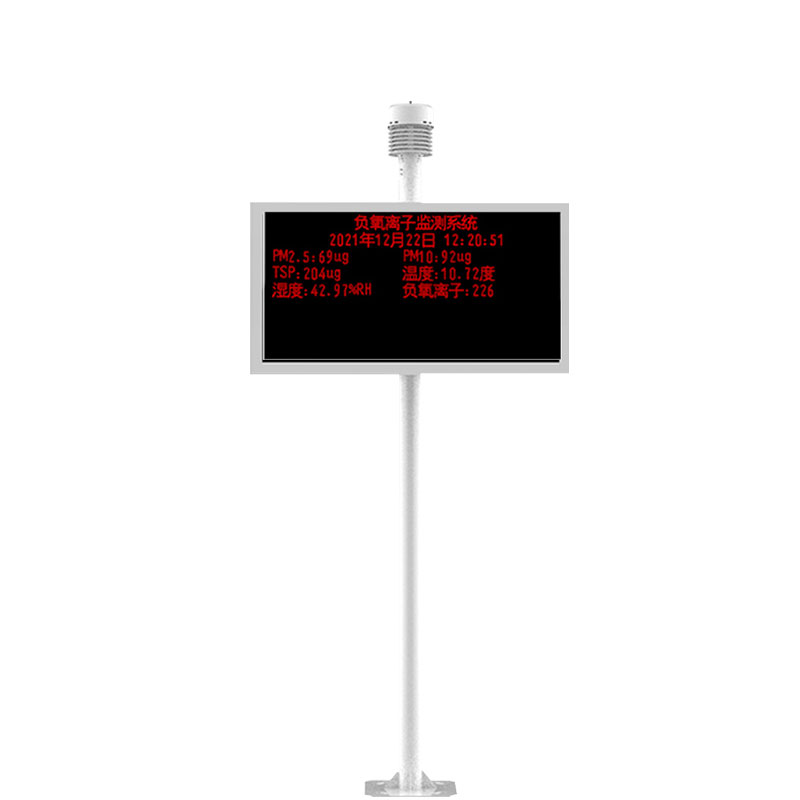
In terms of functional configuration, the core of Park weather station includes a sensor group, data collector, power supply module, and communication unit. Sensors cover basic meteorological elements (such as temperature, humidity, wind speed and direction, air pressure, and rainfall) and ecological environment indicators (such as PM2.5, negative oxygen ions, and ultraviolet intensity). The data collector uses an industrial-grade processor, supporting multi-channel input and local storage, with a sampling interval that can be set to minutes or hours as needed. The power supply system is often compatible with mains power and solar panels paired with batteries to ensure continuous operation in the field. Communication methods include RS485, Ethernet, and 4G wireless transmission, enabling remote data upload to a cloud platform. In addition, the system can be connected to an external LED display to provide real-time weather information and warning messages to visitors.
The application value of Park weather station is mainly reflected in three aspects. First, in the field of ecological management, by monitoring indicators such as negative oxygen ions and particulate matter concentration, it assesses changes in park air quality, providing a basis for vegetation maintenance and water body management. For example, the Kunming Botanical Garden uses a network of weather stations to record temperature and humidity differences in different habitats (such as forest clearings and waterfront areas) to assist in plant introduction research. Secondly, in terms of visitor services, the system combines real-time data and forecast information to push notifications of rainfall, strong winds, and other warnings through displays or mobile terminals, helping visitors adjust their itineraries. The smart terminals in Xishuangbanna Tropical Botanical Garden further integrate disaster warning and popular science content to enhance visitor safety. Finally, in disaster prevention and mitigation, the weather station can set extreme weather thresholds (such as heavy rain and high temperature) to automatically trigger audible and visual alarms. Nankai District Park has strengthened its short-term forecasting capabilities for heavy rain and strong winds by deploying small intelligent stations, supporting emergency response decision-making. The selection and maintenance of the Park weather station system should prioritize practicality and sustainability. Basic models focus on conventional elements such as temperature, humidity, and wind speed, suitable for daily visitor services; advanced models include additional sensors for ultraviolet radiation, noise, and soil temperature and humidity, meeting the needs of scientific research or monitoring of special habitats. Installation sites should avoid obstructions and strong interference sources to ensure data representativeness. Regular maintenance includes cleaning debris from sensor surfaces, calibrating measurement accuracy, and checking power supply stability. For example, the Kunming Botanical Garden uses an online platform for real-time data display and sharing, and has established an application process for research purposes.
The Park weather station system, through multi-dimensional environmental monitoring, has become a key facility in the construction of smart parks. Its long-term operation not only optimizes park management efficiency but also enhances public environmental awareness through data sharing, providing technical support for urban ecological protection and sustainable development.
Traditional fixed visibility monitoring equipment is limited by factors such as installation location and power supply conditions, making it difficult to meet flexible and variable monitoring needs. The emergence of the Portable Visibility Detector has effectively solved this problem.Low visibility...
Poor ventilation and dense traffic flow in the tunnel can easily lead to the accumulation of harmful gases, posing a threat to safety. The Tunnel visibility detector by Fengtu uses the transmission principle to accurately monitor visibility and CO concentration, safeguarding tunnel safety.Product In...
A Portable Weather Station is a highly integrated field meteorological observation device. It integrates sensors, data loggers, power supply, and communication systems into a compact cabinet, enabling automatic collection and remote transmission of meteorological data, which has completely transform...
The price of Agricultural Weather Stations typically ranges from 7200 to 12000 RMB. Before purchasing, it's crucial to clarify your specific monitoring needs. The device integrates multiple sensors for real-time collection of field meteorological data, and the price difference mainly stems...


 Skype
Skype
 whatsapp
 mail
mail