Shandong Fengtu IOT Technology Co., Ltd
Sales Manager:Ms. Emily Wang
Cel,Whatsapp,Wechat:+86 15898932201
Email:info@fengtutec.com
Add:No. 155 Optoelectronic Industry Accelerator, Gaoxin District, Weifang, Shandong, China


Sales Manager:Ms. Emily Wang
Cel,Whatsapp,Wechat:+86 15898932201
Email:info@fengtutec.com
Add:No. 155 Optoelectronic Industry Accelerator, Gaoxin District, Weifang, Shandong, China
time:2026-03-25 11:26:25 source:Weather Station viewed:260 time
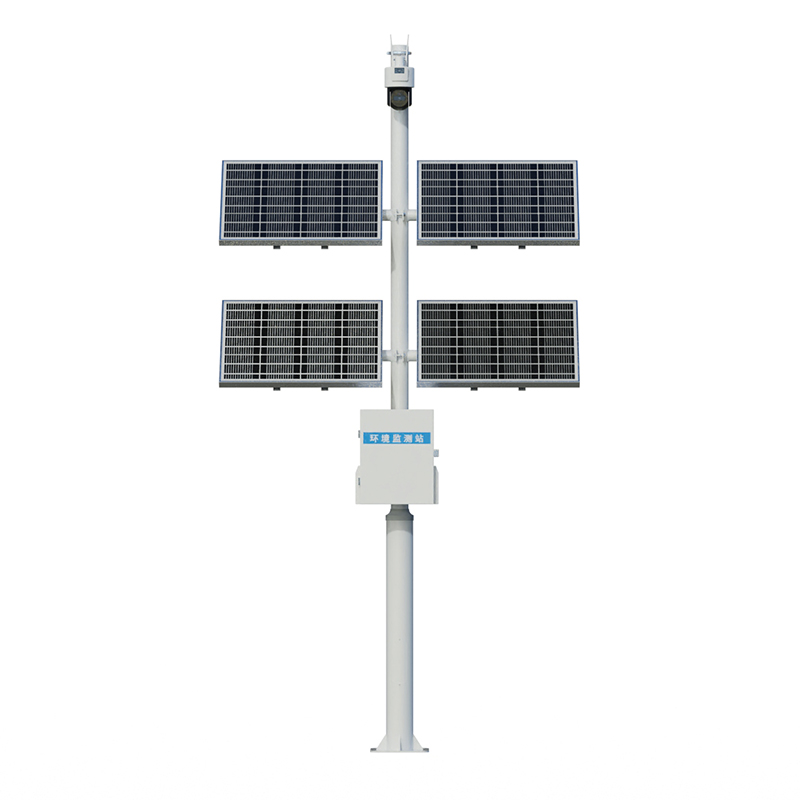
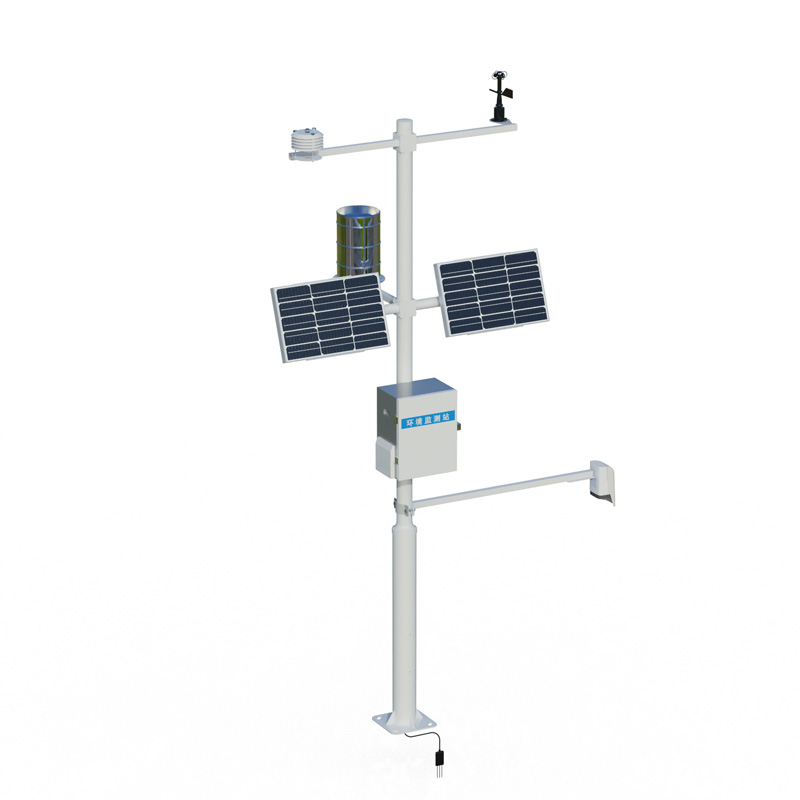
Plant Growth Monitoring facilitates real-time monitoring of crop growth and development, pest and disease outbreaks, and disaster conditions through both daytime and nighttime infrared video feeds. By integrating meteorological sensors, soil moisture sensors, and pest forecasting lamps, the system automatically monitors field conditions—including seedling status, pest activity, and disaster impacts—while recording environmental parameters such as temperature, humidity, and light intensity. This enables farm managers to remotely guide agricultural operations, such as irrigation, fertilization, and pesticide application.
Plant Growth Monitoring is an automated system that integrates video acquisition with environmental monitoring. The system comprises high-definition cameras, infrared night-vision modules, meteorological sensors, soil moisture sensors, pest forecasting lamps, and a data acquisition and transmission unit. During the day, the cameras capture visible-light images of the crops; at night, they switch to infrared mode to provide round-the-clock video surveillance, thereby meeting the continuous observation requirements for crop growth status, pest and disease manifestations, and the impact of natural disasters.
Meteorological sensors continuously record environmental parameters such as air temperature, humidity, and light intensity, while soil moisture sensors measure soil moisture and temperature at various depths. The pest forecasting lamps utilize trapping mechanisms combined with image recognition technology to identify and quantify pest species and populations. All monitoring data and video footage are uploaded wirelessly to a management platform, which supports real-time viewing, historical playback, data comparison, and threshold-based alert functions.
Managers can access the platform via computer or mobile device to remotely view current field imagery and retrieve environmental data and pest records for any specific time period. As crops progress through different growth stages, their requirements for water, nutrients, and temperature vary. The soil moisture data collected by the system aids in determining whether irrigation is necessary; meteorological data helps assess whether current temperature and humidity levels are optimal; pest data indicates whether pest and disease levels have reached intervention thresholds; and video imagery provides a visual verification of crop vigor and overall field conditions. Based on this comprehensive information, managers can formulate specific strategies for irrigation, fertilization, and pesticide application, thereby achieving precise agricultural management.
The deployment of Plant Growth Monitoring allows managers to gain full insight into the entire crop growth cycle without the need for frequent physical visits to the fields. Continuous, long-term data recording can also be utilized to analyze the patterns of how varying light conditions, temperature fluctuations, and humidity levels impact crop growth, thereby providing a basis for variety selection, crop rotation planning, and production scheduling. By integrating video feeds with sensor data, the system enables the automated monitoring of seedling health, pest infestations, and disaster conditions; while simultaneously enhancing management efficiency, it offers technical support for improving both crop yield and quality.
Handheld Weather Stations need continuous upgrades to better meet diverse meteorological monitoring needs. The FT-SQ6+ has been upgraded in multiple aspects compared to its predecessor, the FT-SQ5.First, it offers a richer set of measurement parameters. The FT-SQ6+ adds measurements of average wind...
Agricultural monitoring equipment integrates multiple sensors to collect real-time data on soil moisture, crop growth, pest infestation, and disaster conditions to guide agricultural production....
In the modern meteorological monitoring system, the Visibility sensor has achieved functional expansion and upgrade. It can not only accurately monitor visibility but also identify various weather phenomena, so it is called a visibility weather phenomenon instrument.This instrument is mainly based o...
Temperature and humidity are common terms in daily life, which can be divided into temperature and humidity. Temperature measures the degree of hotness or coldness of an object and is commonly expressed in degrees Celsius and other units. Humidity reflects the water vapor content in the air and is d...


 Skype
Skype
 whatsapp
 mail
mail