Shandong Fengtu IOT Technology Co., Ltd
Sales Manager:Ms. Emily Wang
Cel,Whatsapp,Wechat:+86 15898932201
Email:info@fengtutec.com
Add:No. 155 Optoelectronic Industry Accelerator, Gaoxin District, Weifang, Shandong, China


Sales Manager:Ms. Emily Wang
Cel,Whatsapp,Wechat:+86 15898932201
Email:info@fengtutec.com
Add:No. 155 Optoelectronic Industry Accelerator, Gaoxin District, Weifang, Shandong, China
time:2026-02-12 10:13:52 source:Weather Station viewed:304 time
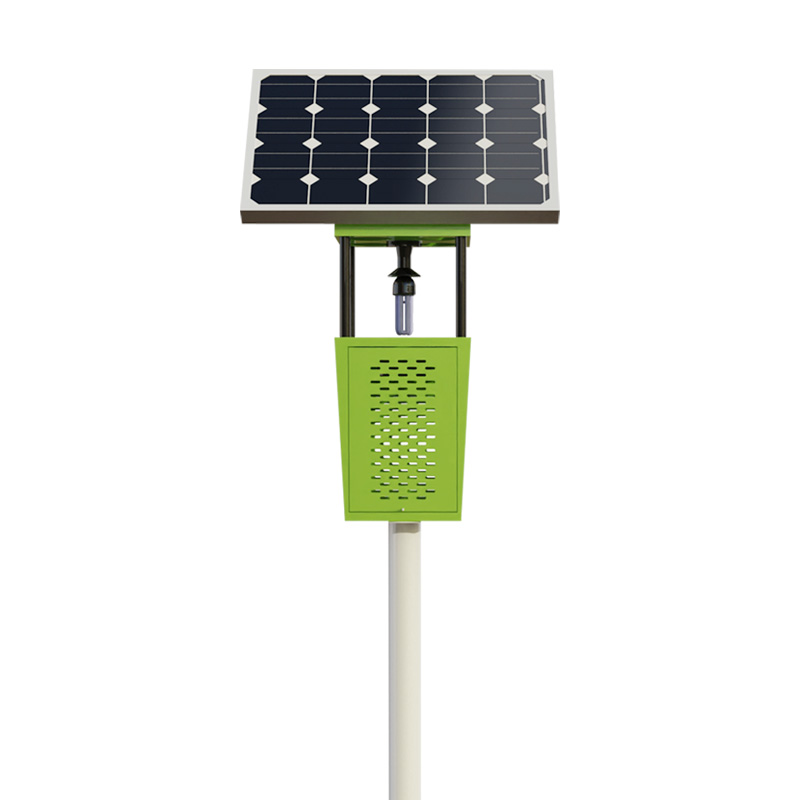
insecticide lamp is a device that uses the phototaxis of insects to attract them and then physically captures them using a negative pressure airflow generated by a fan. It is solar-powered and features intelligent light control, making it suitable for farmland and orchards, and effectively reducing the use of chemical pesticides.
insecticide lamp is a physical pest control device specifically designed for the agricultural and forestry sectors. Its core function is to attract pests using a specific wavelength of light and then physically capture them using wind power, thereby controlling pest populations and reducing reliance on chemical pesticides.
The device's workflow is based on the phototaxis of insects. The specific wavelength of light emitted by the lamp strongly attracts most nocturnal pests. Attracted to the light source, the pests fly towards the lamp and, upon approaching, are drawn into the collection device by the strong negative pressure airflow generated by the built-in high-speed rotating fan. The pests inside the collector die from dehydration in the sealed environment; the entire process does not involve any chemical agents.
The device's energy supply system relies on solar energy technology. The lamp body integrates a solar panel on top, converting solar energy into electrical energy during the day and storing it in a matching battery. A built-in light sensor or time control module automatically activates the lights and fan system at dusk and automatically shuts off at dawn, achieving a fully automatic day-night cycle. This design allows for deployment in vast outdoor environments such as fields, orchards, and woodlands, far from mains power grids.
In terms of application effectiveness, this device can capture various phototactic adult lepidopteran and coleopteran pests, achieving "killing insects of all sizes." Continuous operation can effectively reduce the initial population of pests in the field, disrupting their normal reproductive cycle and thus mitigating damage to crops. Long-term use helps control pest populations below economic thresholds, making it an important technical means for achieving green pest control and safe agricultural production.
In actual deployment, the appropriate light source wavelength and installation height must be selected based on the type of crop and target pest. The deployment density must consider the effective control radius of a single lamp and the overall area of the plot. The equipment's physical pest control method avoids the development of pesticide resistance in pests while protecting their natural enemies, thus contributing to the maintenance of farmland ecological balance. Its pesticide-free residue characteristic aligns with the development requirements of modern green and organic agriculture.
The insecticide lamp system combines solar energy utilization, intelligent control, and physical pest control technology to provide an environmentally friendly pest management option. It is not only an effective supplement or alternative to chemical control but also a practical tool under the principles of ecological conservation and sustainable agricultural development. Through large-scale, scientifically deployed application, this equipment can play a positive role in regional integrated pest management systems.
Lightning monitor is a high-precision lightning monitoring and early warning device that accurately captures lightning activity by monitoring changes in the atmospheric electric field in real time, providing information such as the time, location, and intensity of lightning strikes. This devic...
Agricultural Weather Stations are an important part of the construction of the demonstration base for smart agricultural meteorological services. The multi - element Agricultural Weather Stations standing in the fields can collect data on atmospheric temperature and humidity, soil moisture, and crop...
As a key hardware product of the agricultural meteorological information monitoring system, theFarmland Weather Stationis the core equipment for real-time online monitoring of agricultural meteorological elements. It is of great significance for improving the monitoring capacity of agric...
The marine environment is highly corrosive, far exceeding that of the inland atmospheric environment, posing a severe test to all exposed equipment. Water vapor forms an imperceptible water film on metal surfaces. This water film is not ordinary pure water; it dissolves a large amount of oxygen, chl...


 Skype
Skype
 whatsapp
 mail
mail