Shandong Fengtu IOT Technology Co., Ltd
Sales Manager:Ms. Emily Wang
Cel,Whatsapp,Wechat:+86 15898932201
Email:info@fengtutec.com
Add:No. 155 Optoelectronic Industry Accelerator, Gaoxin District, Weifang, Shandong, China


Sales Manager:Ms. Emily Wang
Cel,Whatsapp,Wechat:+86 15898932201
Email:info@fengtutec.com
Add:No. 155 Optoelectronic Industry Accelerator, Gaoxin District, Weifang, Shandong, China
time:2025-06-05 09:46:24 source:Weather Station viewed:424 time
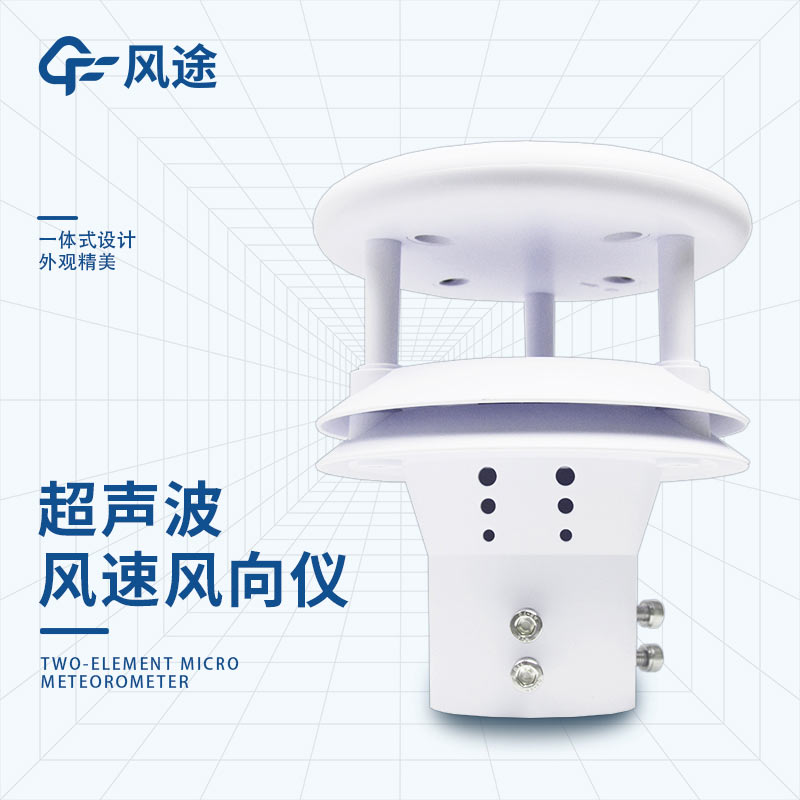
In the field of meteorological observation, wind speed and direction sensors are crucial instruments. They are primarily used to measure two key meteorological elements—wind direction and wind speed—providing essential data for weather forecasting, climate research, agricultural production, navigation, aviation, and other activities.
Traditional wind speed and direction sensors mostly adopt mechanical structures. The wind direction component typically consists of a wind vane and a wind direction dial. The lightweight arrow of the wind vane points to the direction from which the wind is blowing under the effect of wind, and the wind direction is determined by comparing it with the angle scales on the dial. Wind speed measurement usually relies on propeller-type or three-cup anemometers. The propeller rotates with the wind, and its rotational speed is proportional to the wind speed; the three-cup anemometer uses wind-driven cups to rotate, and the wind speed is calculated based on the rotation frequency.
With technological advancements, ultrasonic anemometers have emerged, abandoning traditional mechanical components and using ultrasonic principles for measurement. They are equipped with multiple ultrasonic transmitting and receiving probes, calculating wind speed and direction by precisely measuring the time difference of ultrasonic waves propagating in different directions.
This method offers numerous advantages over traditional mechanical structures. First, it eliminates mechanical wear, significantly improving the instrument's reliability and service life while reducing maintenance costs. Second, it has a low starting wind speed, enabling more sensitive monitoring of gentle breezes and more accurate measurements in low-wind-speed environments. It can be flexibly applied in various complex environments, such as mountains and offshore platforms, where deploying traditional large equipment is difficult, allowing for easy meteorological monitoring.
Fengtu's ultrasonic anemometer features top-hidden ultrasonic probes to avoid interference from rain and snow accumulation and natural wind obstruction. It detects wind speed and direction by transmitting continuous frequency-modulated ultrasonic signals and measuring relative phase. The instrument boasts high measurement accuracy, with a wind speed measurement range of 0–60 m/s and a precision of ±0.1 m/s, and a wind direction measurement range of 0–360° with a precision of ±2°. Additionally, it has strong anti-interference capabilities, equipped with a watchdog circuit and automatic reset function to ensure stable system operation. Furthermore, it offers advantages such as high integration, no moving parts, zero wear, maintenance-free operation, and no need for on-site calibration. The standard output signal is an RS485 communication interface (MODBUS protocol), with optional multiple interfaces and wireless transmission modules. It can be widely used in urban environmental monitoring, wind power generation, meteorological monitoring, bridges and tunnels, marine vessels, airports, and many other fields.
In ecologically beautiful areas, such as forests, mountain streams, rivers, lakes, seas, and around waterfalls, people often feel that the air is particularly fresh. This is mainly due to the relatively high content of negative oxygen ions in the air in these places. Negative oxygen ions are oxygen...
A scattering-type visibility sensor is an instrument that estimates visibility by measuring the intensity of scattered light in the atmosphere. It is based on three assumptions: the atmosphere is homogeneous, the extinction coefficient is equal to the scattering coefficient, and the scattered light...
A Portable Weather Station is a mobile observation device that integrates multiple meteorological sensors. It is capable of monitoring and recording various atmospheric environmental elements in real-time, providing accurate on-site data support for core meteorological operations, emergency monitori...
In meteorological observation and environmental monitoring, visibility is a key indicator, which is of great significance to traffic safety, navigation operations, and meteorological research. The Fengtu FT-N10A2 Visibility Sensor features a stainless steel body design, allowing it to be used with c...



 Skype
Skype
 whatsapp
 mail
mail