Shandong Fengtu IOT Technology Co., Ltd
Sales Manager:Ms. Emily Wang
Cel,Whatsapp,Wechat:+86 15898932201
Email:info@fengtutec.com
Add:No. 155 Optoelectronic Industry Accelerator, Gaoxin District, Weifang, Shandong, China


Sales Manager:Ms. Emily Wang
Cel,Whatsapp,Wechat:+86 15898932201
Email:info@fengtutec.com
Add:No. 155 Optoelectronic Industry Accelerator, Gaoxin District, Weifang, Shandong, China
time:2025-05-22 08:52:40 source:Weather Station viewed:414 time
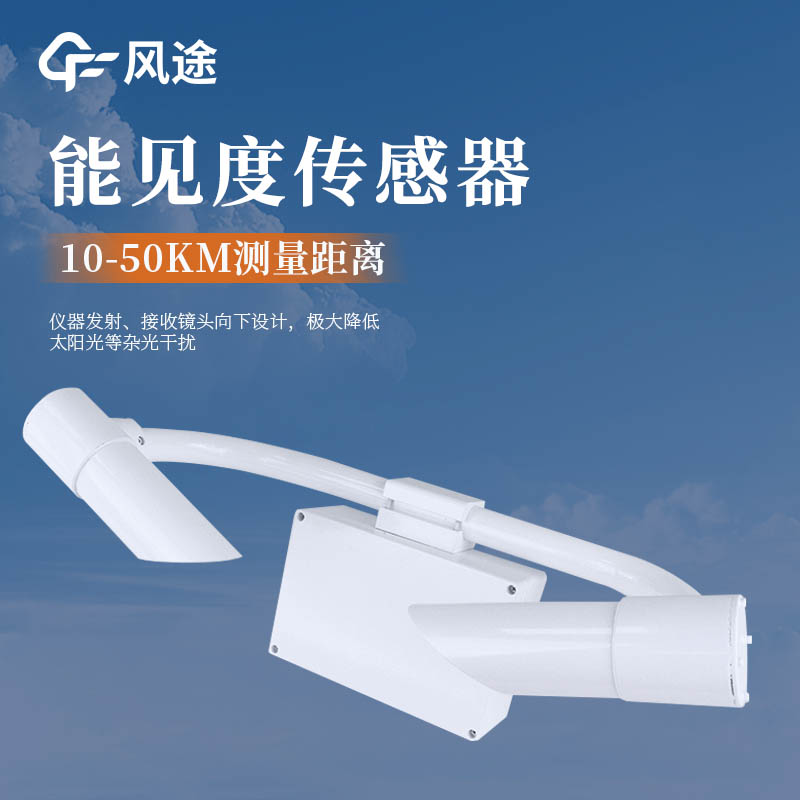
A scattering-type visibility sensor is an instrument that estimates visibility by measuring the intensity of scattered light in the atmosphere. It is based on three assumptions: the atmosphere is homogeneous, the extinction coefficient is equal to the scattering coefficient, and the scattered light intensity is proportional to the scattering coefficient. During operation, the transmitting end emits light radiation to irradiate the atmosphere in the sampling space. Aerosol particles in the atmosphere scatter the light. The scattered light intensity is related to the particle concentration and size, which in turn can reflect the atmospheric visibility. By measuring the scattered light intensity at a specific angle, the total scattering coefficient is determined, and the visibility is calculated.
According to different scattering angles, scattering-type visibility sensors can be divided into forward scattering visibility sensors and backward scattering visibility sensors.
For the forward scattering visibility sensor, the transmitter and receiver form a certain angle and distance, and the receiver can only receive the forward scattered light from the atmosphere. Its transmitter typically uses an infrared LED as the light source, which is irradiated onto the sampling space after being passed through a lens and pulse modulation. Aerosol particles in the sampling space scatter the light, and the scattered light is filtered by a filter and then detected by the receiver as a forward scattering signal. The total scattering coefficient is determined based on the relationship between the scattering signal at a certain angle and the total scattering amount, and then the CPU converts it into a visibility value through a special algorithm. It has the advantages of small influence of lens contamination on its measurement effect, wide detection range, compact structure, easy adjustment, small volume, high performance-price ratio, and wide application. However, its sampling volume is not large, which may take a point as a substitute for the surface, and using the scattering coefficient in a certain angular direction to replace the total scattering coefficient will introduce relative errors.
The backward scattering visibility sensor mainly adopts backward scattering technology. Its transmission and reception share one optical system. Through the laser-emitted backward scattering measurement method, it can in-situ measure optical parameters such as the density, distribution function, and extinction coefficient of aerosols to obtain visibility values. Its advantages include no need for a cooperative target, sufficient sampling space, the ability to truly reflect the atmospheric conditions in the measurement area, and the ability to obtain visibility information in different areas on the measurement path.
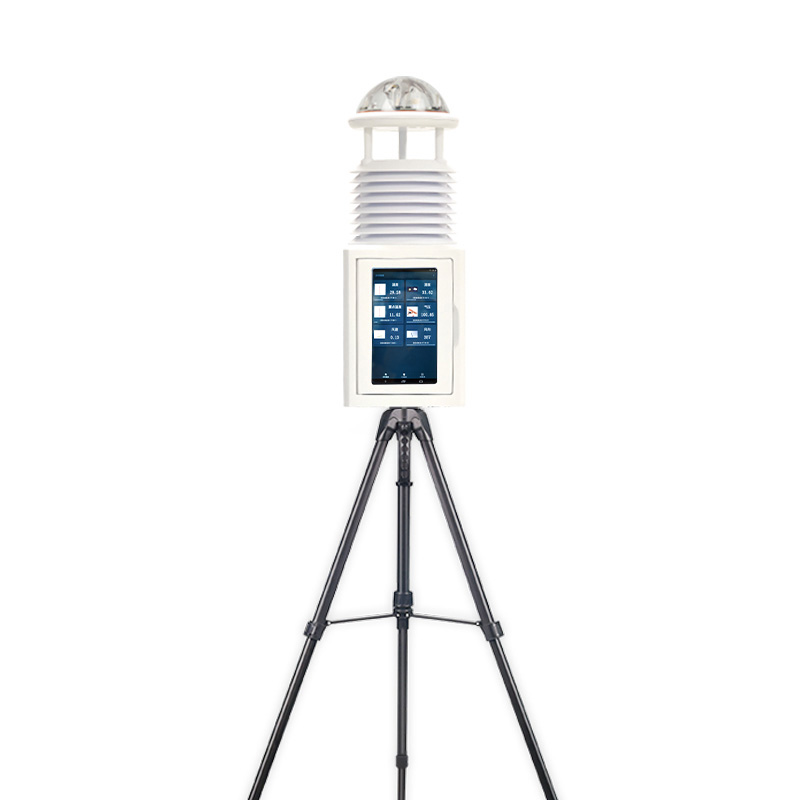
The Portable Weather Station is a small and lightweight device integrating multiple meteorological monitoring functions, possessing obvious functional advantages. It has a small volume and light weight, making it convenient to carry and transport. It can be easily deployed in complex terrains such a...
The FT-WQX10B is an all-in-one anion sensor that integrates the monitoring of a wide range of meteorological elements, including anion, PM2.5, PM10, temperature, humidity, barometric pressure, oxygen content, noise, wind speed and wind direction. The highly integrated design of this sensor makes ins...
A "natural oxygen bar" is a treasured place bestowed by nature upon humanity, where the air is exceptionally fresh and rich in a high concentration of negative oxygen ions.Negative oxygen ions can be regarded as the "vitamins" in the air. After entering the human body through the...
Air pollution is having an increasingly obvious impact on human health and the environment. Today, we introduce an efficient and convenient on-site air monitor - the FT-BQX8 Portable Weather Station.The FT-BQX8 Portable Weather Station is an on-site air monitoring device that can accurately measure...


 Skype
Skype
 whatsapp
 mail
mail