Shandong Fengtu IOT Technology Co., Ltd
Sales Manager:Ms. Emily Wang
Cel,Whatsapp,Wechat:+86 15898932201
Email:info@fengtutec.com
Add:No. 155 Optoelectronic Industry Accelerator, Gaoxin District, Weifang, Shandong, China


Sales Manager:Ms. Emily Wang
Cel,Whatsapp,Wechat:+86 15898932201
Email:info@fengtutec.com
Add:No. 155 Optoelectronic Industry Accelerator, Gaoxin District, Weifang, Shandong, China
time:2026-02-25 10:46:50 source:Weather Station viewed:214 time
Crack Detection Sensor is an automated device integrating multiple sensors that uses Internet of Things (IoT) technology to monitor key parameters in farmland areas in real time, such as wind speed, wind direction, temperature, humidity, light intensity, and soil temperature and humidity. The system automatically uploads and analyzes the collected meteorological data, providing a scientific basis for agricultural production, including sowing, irrigation, fertilization, and pest and disease control.
Agricultural production is closely related to meteorological conditions; factors such as temperature, precipitation, light, and wind directly affect crop growth, development, yield, and quality. Traditional agriculture relies on experience to judge weather changes, making it difficult to cope with complex and variable climate conditions. The emergence of Crack Detection Sensor introduces modern sensing technology and IoT methods to the fields, enabling farmers and agricultural technicians to obtain accurate data on the microclimate of farmland in real time.
Crack Detection Sensor consists of sensor units, a data acquisition unit, a power supply system, and a transmission module. The sensor units are responsible for measuring various parameters, including atmospheric temperature and humidity, wind speed and direction, precipitation, light intensity, and soil temperature and humidity at different depths. The data acquisition unit reads sensor values at a set frequency, performs preliminary processing, and stores the data. The power supply system typically uses solar panels in conjunction with batteries to ensure continuous operation in environments without electricity. The transmission module sends data to a cloud server via 4G or GPRS networks, allowing users to view the data anytime via computer or mobile phone.
Temperature sensors use platinum resistance or thermistor elements; humidity sensors are based on capacitive or resistive moisture-sensing materials; wind speed and direction use a three-cup anemometer and wind vane in conjunction with a photoelectric encoder; and light intensity is measured using silicon photodiodes or photodiodes. Soil sensors utilize frequency domain reflectance technology to determine moisture content, and thermistors measure ground temperature. This multi-factor integrated design allows Crack Detection Sensor to comprehensively present meteorological conditions in the field.
The data acquisition frequency can be set according to user needs, typically every 10 minutes to 1 hour. The acquisition unit's built-in algorithm performs quality control on the raw data, removing obvious outliers. Data uploaded to the cloud platform is processed to generate graphs and statistical reports; some systems also provide historical data query and export functions. When meteorological elements exceed set thresholds, the system can automatically issue early warning information. The application of Crack Detection Sensor spans the entire agricultural production process. Before sowing, soil temperature and humidity data help determine whether soil moisture and temperature are suitable for seed germination. During the growing season, accumulated temperature and light data can be used to predict developmental stages and maturity. Irrigation decisions are based on changes in soil moisture and evapotranspiration to calculate water requirements. Pest and disease prediction models combine temperature and humidity data to analyze disease risk. Before severe weather events such as frost and strong winds, early warning information reminds farmers to take timely protective measures.
In facility agriculture, the role of Crack Detection Sensor is even more prominent. Environmental control within greenhouses requires precise temperature, humidity, and light data. Sensor data is used to control actuators such as ventilators, shading nets, and drip irrigation systems, achieving automated management. In field planting, multi-site networking can form a farmland meteorological monitoring network, reflecting the microclimate differences in different plots.
The installation location of Crack Detection Sensor directly affects data representativeness. Sensors should be installed in open, flat areas with typical vegetation conditions, at least 10 times the height of tall trees and buildings. Anemometers are installed 10 meters above the ground, while temperature and humidity sensors are placed inside a Stevenson screen to avoid direct sunlight. The burial depth of soil sensors is determined based on crop root distribution, typically including multiple layers of observation at depths of 10 cm, 20 cm, and 40 cm.
With the advancement of digital transformation in agriculture, [the weather system] is becoming one of the infrastructures of smart agriculture. The precise meteorological data it provides helps agricultural producers shift from passively responding to weather to actively utilizing climate resources, reducing production risks through scientific decision-making, improving resource utilization efficiency, and providing technical support for the high-yield and high-quality goals of modern agriculture.
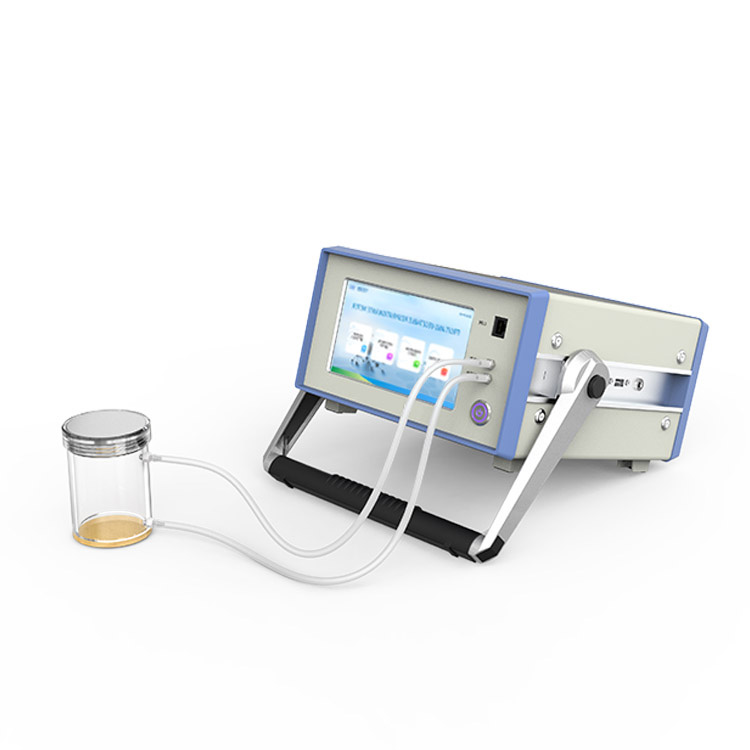
Recommend a Handheld visibility detector, model FT-SN10.It has several highlights.Firstly, it adopts a special testing method. It sucks air into a closed sampling chamber, which can not only ensure real-time exchange with the outside air but also enable normal measurement in a narrow room.Secondly,...
Plant Growth Monitoring is a pole-mounted online monitoring device that can simultaneously and in real-time detect key parameters such as water temperature, conductivity, pH, and dissolved oxygen. This device integrates multiple sensors, avoiding the need for dispersed deployment of single-parameter devices, significantly improving water quality monitoring efficiency and data correlation, and comprehensively assessing water environmental quality. It is suitable for monitoring drinking water, industrial, and irrigation water sources....
Waterway visibility detection is a crucial aspect of ensuring water transportation safety. On river waterways, especially in mountainous river sections, abundant water vapor conditions easily form heavy fog, posing serious threats to ship navigation. During poor visibility conditions, ports are ofte...
Lightning monitor is a high-precision lightning monitoring and early warning device that accurately captures lightning activity by monitoring changes in the atmospheric electric field in real time, providing information such as the time, location, and intensity of lightning strikes. This devic...


 Skype
Skype
 whatsapp
 mail
mail