Shandong Fengtu IOT Technology Co., Ltd
Sales Manager:Ms. Emily Wang
Cel,Whatsapp,Wechat:+86 15898932201
Email:info@fengtutec.com
Add:No. 155 Optoelectronic Industry Accelerator, Gaoxin District, Weifang, Shandong, China


Sales Manager:Ms. Emily Wang
Cel,Whatsapp,Wechat:+86 15898932201
Email:info@fengtutec.com
Add:No. 155 Optoelectronic Industry Accelerator, Gaoxin District, Weifang, Shandong, China
time:2025-08-25 09:29:14 source:Weather Station viewed:437 time
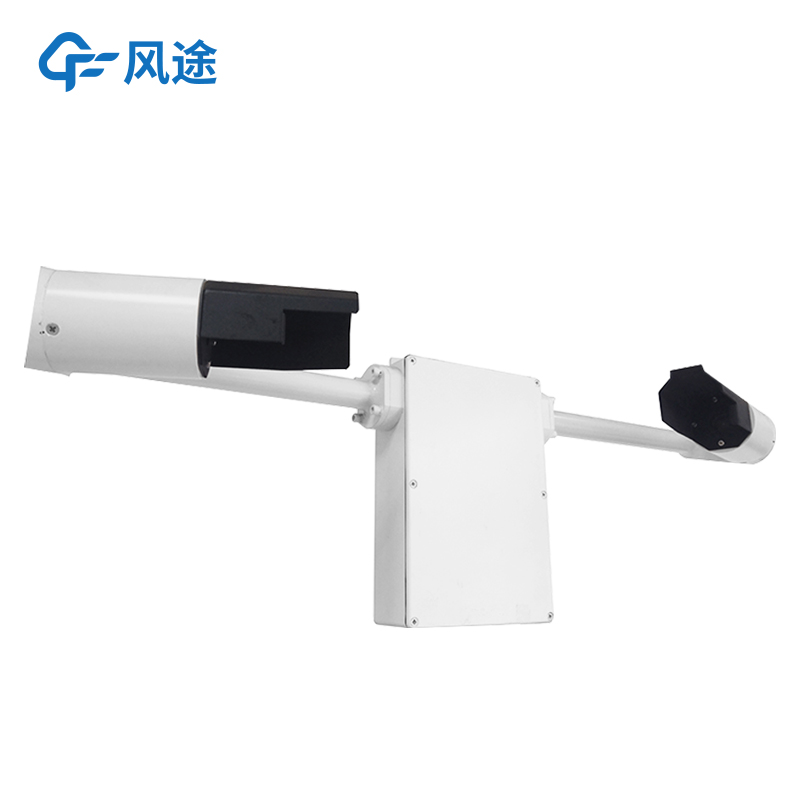
The Visibility and Present Weather Sensor is an automatically continuous monitoring sensor, whose main monitoring targets include visibility, precipitation conditions, and specific types of visibility-impairing weather phenomena.
This device works based on the forward scattering principle. It actively emits infrared light beams, and obtains basic monitoring data by measuring the scattering effect of atmospheric particles in the sampling area on the light beams, as well as the changes in scattered light caused by precipitation particles passing through this area. The device is also equipped with a temperature and humidity sensor inside, which can simultaneously measure the temperature and humidity in the environment. All these collected raw data will be processed and analyzed by the algorithm inside the device, and finally the visibility value, specific type of visibility-impairing weather and type of precipitation weather will be calculated and output.
The Visibility and Present Weather Sensor adopts a highly integrated all-in-one design, which gives it the advantages of small size and low power consumption, and makes it easier to install and perform daily maintenance. The overall performance of the device is stable and reliable, with strong adaptability to different environmental conditions, enabling it to work normally in a variety of scenarios. In addition, the monitoring data it can provide is relatively rich. While meeting the usage needs, it also has a high cost-performance ratio, which can help users find a good balance between cost and function.
In terms of application fields, this Visibility and Present Weather Sensor has a wide range of applications due to its outstanding cost-performance ratio and strong versatility in installation. It is particularly suitable for meteorological monitoring networks that require spatial intensive observation of ambient temperature, humidity, visibility and precipitation. For example, it can play an important role in areas with obvious local weather changes and frequent severe weather such as patchy fog, including highways, railway lines, tunnel interiors, bridge areas and river surroundings. It provides key meteorological data support for traffic operation, safe production, etc., and helps with risk prevention and control as well as decision-making in relevant scenarios.
Lightning monitor monitors and warns of lightning activity by measuring changes in the ground's electrostatic field strength. Based on the field-milling induction principle, its measurement range covers -100kV/m to 100kV/m, with a response time of 3 seconds. It is suitable for continuous m...
Agricultural Weather Stations is a high-precision observation device specifically designed for monitoring and recording meteorological data in fields and forest areas. It can automatically monitor the climate of farmland or forest areas, measuring common meteorological elements such as air temperature, humidity, soil moisture, soil temperature, wind speed, wind direction, rainfall, and light intensity. The data is used to guide precision irrigation, fertilization, and pest and disease control, improving crop yields. Furthermore, it optimizes greenhouse environmental control by analyzing temperature, humidity, and light data....
Visibility can be measured by visual observation, relying on manual inspection to estimate the visibility distance based on whether a certain reference object is visible. This method is simple and intuitive, but it is highly subjective and has poor standardization and objectivity.We recommend using...
Lightning detection sensor integrates five types of sensors: pH, oxygen dissolved, conductivity, turbidity, and temperature. It employs multiple detection principles, including fluorescence, glass electrode, and light scattering methods. Connecting to a host computer or cloud platform via RS48...


 Skype
Skype
 whatsapp
 mail
mail