Shandong Fengtu IOT Technology Co., Ltd
Sales Manager:Ms. Emily Wang
Cel,Whatsapp,Wechat:+86 15898932201
Email:info@fengtutec.com
Add:No. 155 Optoelectronic Industry Accelerator, Gaoxin District, Weifang, Shandong, China


Sales Manager:Ms. Emily Wang
Cel,Whatsapp,Wechat:+86 15898932201
Email:info@fengtutec.com
Add:No. 155 Optoelectronic Industry Accelerator, Gaoxin District, Weifang, Shandong, China
time:2026-04-21 10:51:42 source:Weather Station viewed:157 time
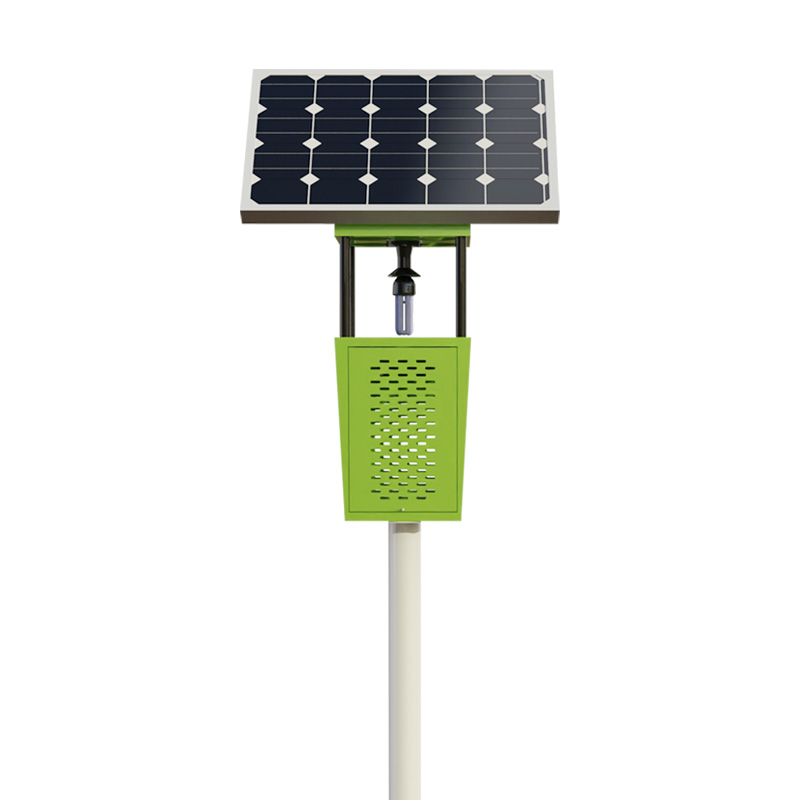
The wind-suction solar insect trap consists of a solar panel, a storage battery, an intelligent controller, an LED insecticidal lamp, a wind-suction mechanism, and a collection bin. It stores electrical energy during the day and operates at night, utilizing negative airflow to draw pests into the collection bin for physical extermination.
The wind-suction solar insect trap is a physical pest control device that employs specific light wavelengths to lure adult pests toward the lamp. A rotating fan then generates negative airflow, drawing the insects into a collector where they are left to air-dry and dehydrate, thereby achieving the objective of pest extermination. The device is primarily composed of a solar panel, a storage battery, an intelligent controller, an LED insecticidal lamp, a wind-suction mechanism, and a collection bin.
During operation, the wind-suction solar insect trap converts light energy into electrical energy via its solar panel during the day, storing this energy in the battery. At night, a light sensor detects ambient brightness levels and transmits this signal to the controller; based on these readings, the controller automatically activates both the LED lamp and the suction fan. The LED lamp emits a multi-spectral light source with a wavelength range of 320 nm to 680 nm, capable of simultaneously attracting and trapping a wide variety of pest species. The rotating fan generates a negative airflow that draws pests approaching the light source into the collection bin, where they remain trapped until they perish from dehydration and desiccation.
The wind-suction solar insect trap is equipped with multiple intelligent control modes. In "Light Control" mode, the device automatically switches off the lamp during the day and switches it on at night, with the operating duration being fully configurable. In "Time Control" mode, the lamp automatically activates during a pre-set time interval and switches off outside of that specific period. The device features a waterproof design, ensuring it remains fully functional even during rainy weather. Furthermore, the intelligent controller incorporates MPPT (Maximum Power Point Tracking) charging capabilities as well as overcharge and over-discharge protection mechanisms, thereby extending the operational lifespan of the battery. Once fully charged, the battery can sustain normal operation for 2 to 3 consecutive days, even during periods of overcast or rainy weather.
Compared to traditional grid-type electric insect traps, the wind-suction solar insect trap is unaffected by the size of the insect body. This resolves the common issue faced by conventional insect traps—namely, the difficulty in effectively eliminating smaller pests—and enables comprehensive, full-coverage extermination of all types of insect pests. The device's total power consumption is kept within 20 watts. In agricultural areas, the control radius of a single unit is no less than 120 meters; in forested areas, it is no less than 80 meters, with a single unit covering an area of approximately 15 to 50 *mu*. The insect collection chamber features a spacious interior and utilizes a removable mesh bag design, facilitating easy assembly, disassembly, and cleaning without the need for frequent emptying.
This wind-suction solar insecticidal lamp can be widely applied across various sectors, including agriculture, forestry, horticulture, animal husbandry, and urban and rural sanitation. It is suitable for use in diverse settings such as farmlands, tea plantations, orchards, vegetable cultivation bases, storage facilities, and fish ponds. The range of pests targeted covers over 1,200 species across more than 80 families—including Lepidoptera, Coleoptera, and Homoptera—encompassing common agricultural and forestry pests such as rice planthoppers, corn borers, beet armyworms, cotton leafworms, and fall webworms. By employing physical methods to eliminate pests rather than chemical agents, the wind-suction solar insecticidal lamp helps reduce pesticide usage; this prevents pesticide residues from contaminating soil, water sources, and agricultural produce, while also mitigating the development of pesticide resistance in pests, thereby contributing to enhanced levels of eco-friendly pest control.
The Clairvoyance water and rain query system is based on the Internet of Things technology, and realizes the function of water resources monitoring and early warning through the processing and analysis of the data acquisition module. The system conducts comprehensive management and data analysis of...
A Spore Catcher is a device used to monitor and analyze pathogenic spores in the air. It consists of a high-power optical microscopy imaging system, precision limit technology, automatic intelligent focusing fusion technology, and IoT transmission control technology. Utilizing optoelectronic and num...
The Portable Visibility Detector is an atmospheric visibility monitoring device system that can be flexibly moved and is convenient to carry. Its working principle is mainly based on the optical scattering principle, and the visibility is calculated by measuring the optical properties of the atmosph...
Agricultural meteorological stations is a device used for real-time monitoring of meteorological parameters in the farmland environment, including air temperature, humidity, soil moisture, soil temperature, wind speed, wind direction, rainfall, and light intensity. It features data acquisition, wireless transmission, automatic storage, threshold alarming, and data analysis functions, supporting agricultural management, pest and disease forecasting, and scientific research and teaching....


 Skype
Skype
 whatsapp
 mail
mail