Shandong Fengtu IOT Technology Co., Ltd
Sales Manager:Ms. Emily Wang
Cel,Whatsapp,Wechat:+86 15898932201
Email:info@fengtutec.com
Add:No. 155 Optoelectronic Industry Accelerator, Gaoxin District, Weifang, Shandong, China


Sales Manager:Ms. Emily Wang
Cel,Whatsapp,Wechat:+86 15898932201
Email:info@fengtutec.com
Add:No. 155 Optoelectronic Industry Accelerator, Gaoxin District, Weifang, Shandong, China
time:2026-04-24 10:17:46 source:Weather Station viewed:191 time
The Oil and Gas Storage Facility Lightning Monitoring and Early Warning System utilizes MEMS electric field sensing technology to monitor changes in atmospheric electric field intensity in real time. By employing an algorithm that combines electric field differentiation with threshold analysis, the system analyzes the developmental trajectory of thunderstorm clouds and issues a three-tiered warning—yellow, orange, or red—10 to 30 minutes in advance. The device requires no mechanical rotating parts, features low power consumption, and supports remote networking and deployment.
Designed for high-risk industrial sectors—such as refining and chemical plant zones, tank farms, and oil and gas transmission stations—this system serves as a regional, real-time platform for lightning monitoring and early warning. The system's core functionality lies in its ability to capture anomalous changes in atmospheric electric field intensity during the nascent stages of thunderstorm cloud formation; by issuing warning signals prior to a lightning strike, it provides oil and gas storage facilities with a critical window of opportunity for emergency response. Statistics indicate that lightning strikes account for 32.5% of all oil tank fires; following the deployment of this lightning early warning system, safety incidents caused by lightning strikes at oil transmission stations have decreased significantly, and the rate of equipment damage has been substantially reduced.
The system's core technology is a fully digitized electric field detection architecture based on MEMS technology. Unlike traditional field-mill electric field meters, the MEMS electric field sensor is fabricated using micro-electromechanical systems processes; it contains no moving mechanical parts—such as motors—that are prone to wear and tear, and the sensor weighs a mere 710 grams. Operating on the principle of charge induction, the sensor monitors the atmospheric electric field intensity above the storage facility—along with its changing trends—in real time to capture early signals of charge accumulation within thunderstorm clouds. Under clear-sky conditions, the average electric field intensity at ground level is approximately 150 V/m; however, when thunderstorm clouds form overhead, the field intensity can surge to over 2 kV/m. Furthermore, when the field intensity continues to rise and exceeds 4 kV/m, the probability of a lightning flash occurring exceeds 90%.
To ensure a higher level of warning accuracy, the system employs an optimized algorithm that combines electric field differentiation with threshold analysis. Compared to conventional methods that rely solely on single-value thresholds, this algorithm effectively mitigates false alarms triggered by adverse weather conditions—such as rain, strong winds, snow, or blowing dust—or by the transient passage of objects generating strong static electricity. During trial operations at four large-scale oil depots in Henan Province, the system achieved a warning accuracy rate exceeding 90%, with a maximum lead time of 39 minutes. Warning signals are categorized into three levels: Level 1 indicates that a lightning risk is developing; Level 2 issues a warning that lightning is imminent; and Level 3 confirms that a lightning flash is about to occur. The system can be connected to audible and visual alarms as needed to enable automated alerts.
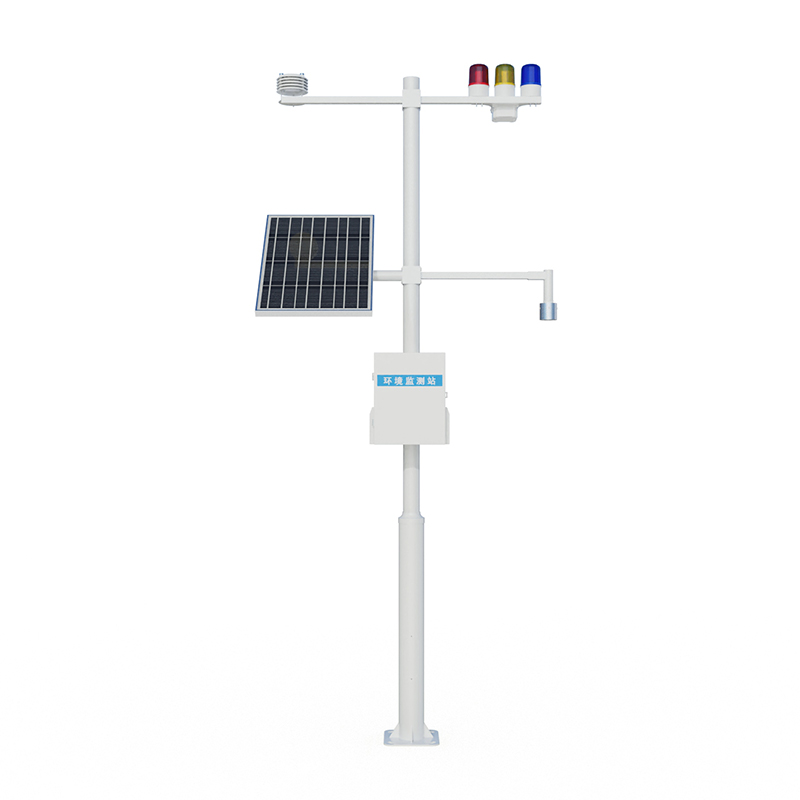
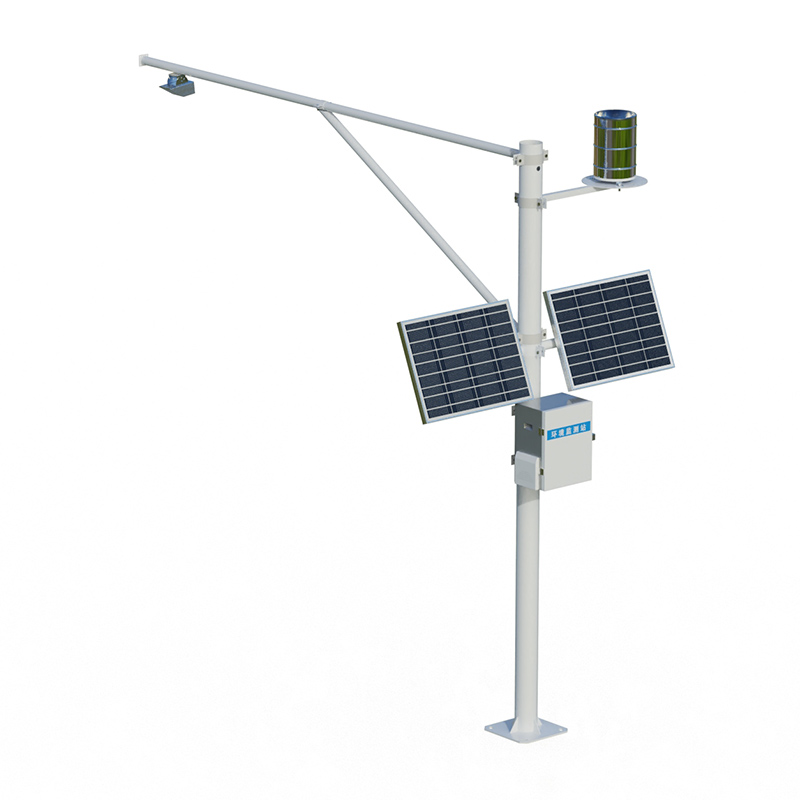
In terms of system architecture, the Oil and Gas Depot Lightning Monitoring and Early Warning System comprises lightning warning probes, a data processing host, a solar power supply system, a direct lightning protection system, a surge protection system, a grounding system, and optional auxiliary sensors for parameters such as temperature and humidity. The lightning warning probes must be installed in open, outdoor areas free from obstructions or surrounding impediments; they must not be placed near generator exhaust outlets, utility poles, or beneath high-voltage power lines. The equipment operates continuously and stably under standard temperature and humidity conditions, while the controller features an operating temperature range of -40°C to 80°C, ensuring normal functionality even under extreme climatic conditions.
The system's warning data can be uploaded to a cloud-based management platform via a wireless communication module, allowing administrators to monitor real-time fluctuations in electric field intensity and the status of the three-tier warning system via mobile devices or computer terminals. Furthermore, the system is capable of exchanging data with existing intelligent security and control platforms at the oil depots. Upon the triggering of a lightning warning, the system can automatically initiate protective measures—such as reinforcing storage tank seals or cutting off power to critical equipment—thereby achieving comprehensive, end-to-end management that spans the entire process from the early detection of storm clouds to the full-cycle tracking of potential hazards. To date, this system has been successfully deployed and commissioned at numerous large-scale oil depots, including the Sutai Mountain Oil Depot in Huzhou (Zhejiang), the Linhai Oil Depot in Taizhou (Zhejiang), the Smart Depot Zone in Dongying (Shandong), as well as facilities in Zhengzhou, Luoyang, Xinxiang, and Xuchang (Henan).
Rain is a natural necessity, but excessive rainfall can bring about serious disasters. Urban waterlogging can lead to traffic paralysis, and floods can submerge streets and houses, posing a threat to life safety. Heavy rainfall in mountainous areas is likely to trigger mountain torrents, landslides...
Based on the principle of charge induction, the Lightning Warning System provides localized short-term lightning warnings through atmospheric electric field detection. Primarily designed for applications in aerospace, defense, oil and petrochemical, power grid, oil depots, and mining, it can c...
Portable Weather Station FT-BQX8. This is a high-precision automatic weather observation device produced by Fengtu Technology. It is highly integrated, low power consumption, and can be quickly installed, making it particularly suitable for field monitoring.It can simultaneously observe eight key en...
The Agricultural Environment Monitoring System system consists of five parts: weather sensors, data collector, solar power system, mounting pole, and cloud platform. It can comprehensively monitor key meteorological elements such as temperature, humidity, wind speed, and light intensity, build...


 Skype
Skype
 whatsapp
 mail
mail