Shandong Fengtu IOT Technology Co., Ltd
Sales Manager:Ms. Emily Wang
Cel,Whatsapp,Wechat:+86 15898932201
Email:info@fengtutec.com
Add:No. 155 Optoelectronic Industry Accelerator, Gaoxin District, Weifang, Shandong, China


Sales Manager:Ms. Emily Wang
Cel,Whatsapp,Wechat:+86 15898932201
Email:info@fengtutec.com
Add:No. 155 Optoelectronic Industry Accelerator, Gaoxin District, Weifang, Shandong, China
time:2026-05-12 11:05:38 source:Weather Station viewed:226 time
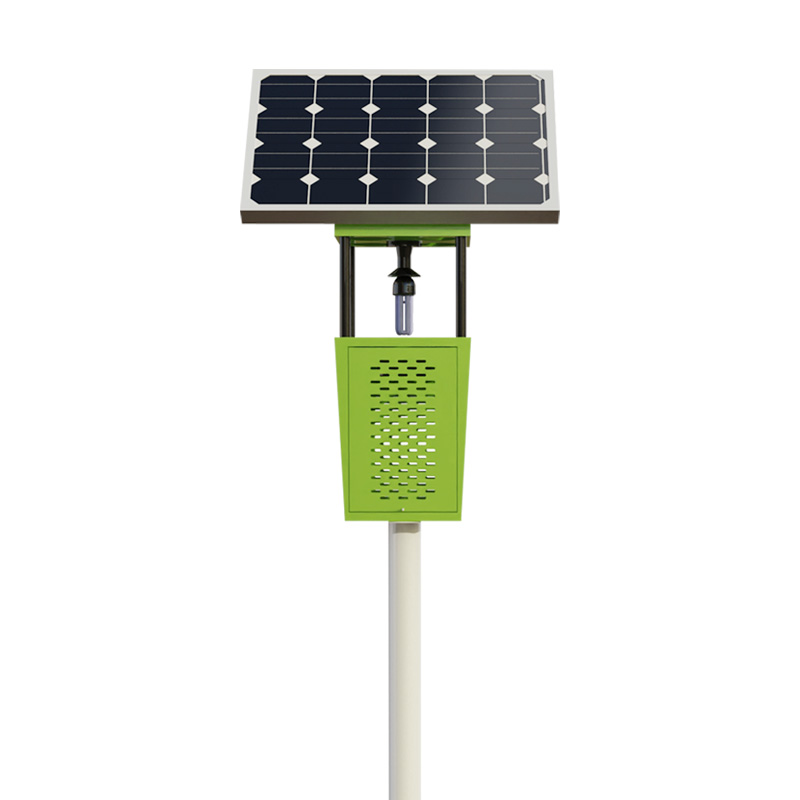
The price of wind-suction solar-powered insecticidal lamps fluctuates between 1100 yuan and 4000 yuan depending on the configuration, with a basic single-unit model around 2200 yuan. The equipment uses a 320-680nm multispectral insect-attracting light source and a wind-suction negative pressure insecticidal principle. Powered by solar energy, it automatically attracts and kills pests at night. A single lamp covers a 120-meter radius area in farmland and is suitable for various scenarios such as orchards, tea gardens, farmland, and forestry.
The wind-suction solar-powered insecticidal lamp is a green plant protection device that uses solar energy as its power source and a physical trapping principle. The core working principle is to use a multispectral insect-attracting lamp tube with a wavelength of 320nm to 680nm to actively attract phototactic pests to the light source at night. When the pests fly near the lamp, the internal fan starts and generates negative pressure airflow, sucking the insects into the collection box, where they are dried and die naturally. This insect-attracting lamp utilizes various insect tropisms, including phototaxis, wavetaxis, colorataxis, and pheromone attraction, to selectively target and kill insects within a specific wavelength and band. Its wind-suction structure is not limited by insect size, avoiding the limitation of small insects being unable to be killed compared to traditional high-voltage grid insecticides, enabling the killing of insects of all sizes.
The wind-suction solar-powered insecticidal lamp is powered by a monocrystalline silicon solar panel. It stores energy during the day and automatically activates the insect-attracting light source at night. The system offers two operating modes: light-controlled and time-controlled. In light-controlled mode, the device automatically switches its on/off state based on ambient light intensity, automatically turning on at dusk and turning off at dawn. In time-controlled mode, users can set specific operating time intervals according to their needs. The entire device meets the standard for normal operation in rainy weather, and its waterproof design allows it to continue attracting and killing insects even in cloudy or rainy weather, ensuring continuous pest control. The solar power system is equipped with an MPPT charging management module and a built-in 20Ah lithium battery, enabling the device to maintain normal operation even under extreme weather conditions of 2 to 3 consecutive days of cloudy or rainy weather. The control radius of a single lamp in farmland should be no less than 120 meters, and in forest areas no less than 80 meters. A single unit can effectively cover 30 to 50 mu (approximately 2 hectares) of farmland.
Regarding price, the market price of wind-suction solar insecticidal lamps varies considerably depending on the configuration. Basic single-unit models are priced between 1500 and 2200 yuan, while network-enhanced models, which integrate remote monitoring and SMS alerts, are typically priced between 2500 and 4000 yuan. Government procurement projects can achieve transaction prices ranging from 1103.60 to 3000 yuan, with bulk purchases yielding even more favorable unit prices. Major manufacturers are concentrated in Weifang City, Shandong Province, including Shandong Fengtu and Shandong Tianqiong, among others. The technical parameters and pricing of products from different brands vary slightly.
Wind-suction solar insecticidal lamps have been validated through large-scale application in agriculture and forestry. In Shibing County, Guizhou Province, 17 wind-suction solar-powered insecticidal lamps were purchased, covering an area of over 350 mu (approximately 23 hectares) in the dam area, benefiting nearly 100 farming households. Local calculations show that after the equipment is fully implemented, the annual use of chemical pesticides per mu (approximately 0.067 hectares) can be reduced by about 30%, which is beneficial for reducing production costs and improving the quality and safety of agricultural products. In a large-scale application case in Shitan Town, Xiangtan County, Hunan Province, the equipment's specific wavelength ultraviolet light and LED light source efficiently attract various phototactic pests such as lepidopterans and coleopterans at night, achieving green control through all-physical trapping. This equipment can also be used in various scenarios such as orchards, tea gardens, granaries, and urban and rural environmental sanitation, with light control functions and time settings to meet the personalized control needs of different scenarios.
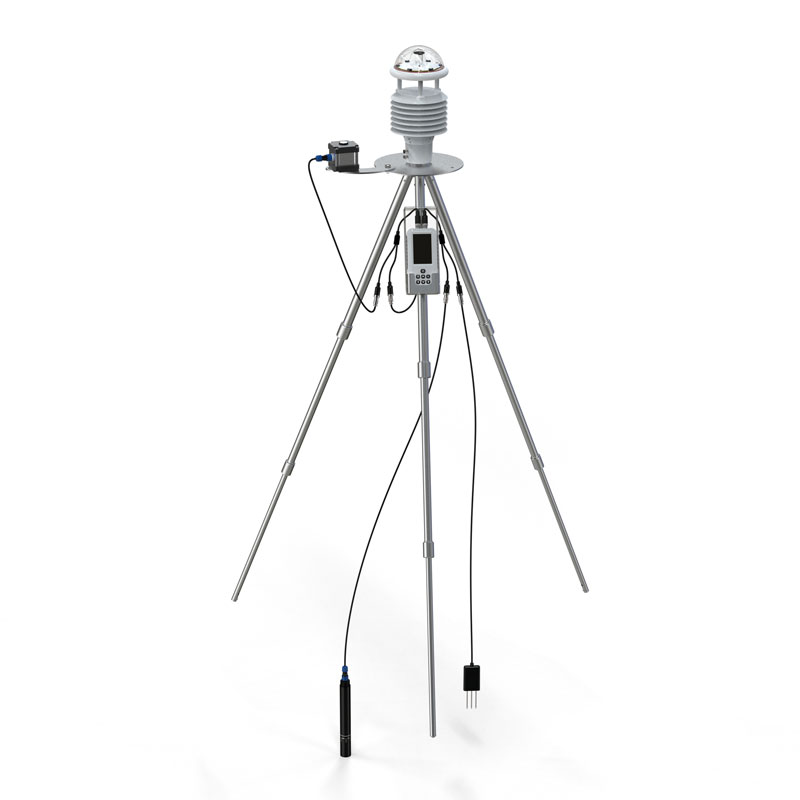
In modern society, the Weather Station Monitoring System is of great importance. It is a comprehensive system integrating multiple technologies and devices, capable of real-time and accurate monitoring and analysis of various meteorological elements and related environmental parameters in the atmosp...
When the fog is thick, it is particularly difficult to navigate ships in places like the Huangpu River where the waterway is narrow and the navigation conditions are complex. Due to the heavy fog, the pilots can hardly see the ships in the distance and the objects on the shore. At this time, relying...
Technological advancements have brought new development directions to the field of meteorological monitoring. The launch of the Portable Weather Station meets people's demands for diversified and accurate meteorological data.This weather station integrates a variety of advanced technologies. Hig...
In scenarios such as emergency rescue and outdoor operations, there is a need to accurately grasp meteorological data, which requires the use of a Small Handheld Portable Weather Station. This is a practical tool. It integrates monitoring functions for 11 core meteorological elements, meeting data n...


 Skype
Skype
 whatsapp
 mail
mail