Shandong Fengtu IOT Technology Co., Ltd
Sales Manager:Ms. Emily Wang
Cel,Whatsapp,Wechat:+86 15898932201
Email:info@fengtutec.com
Add:No. 155 Optoelectronic Industry Accelerator, Gaoxin District, Weifang, Shandong, China


Sales Manager:Ms. Emily Wang
Cel,Whatsapp,Wechat:+86 15898932201
Email:info@fengtutec.com
Add:No. 155 Optoelectronic Industry Accelerator, Gaoxin District, Weifang, Shandong, China
time:2025-08-14 09:30:59 source:Weather Station viewed:368 time
Intelligent transportation utilizes new-generation information technologies such as the Internet of Things and cloud computing, along with theoretical tools like transportation science and artificial intelligence, aiming to achieve comprehensive perception and scientific decision-making. By building a dynamic information service system, it analyzes traffic data to optimize resource allocation, improves the level of decision-making, management and service, promotes the safe and efficient development of transportation, and helps with industrial transformation and upgrading.
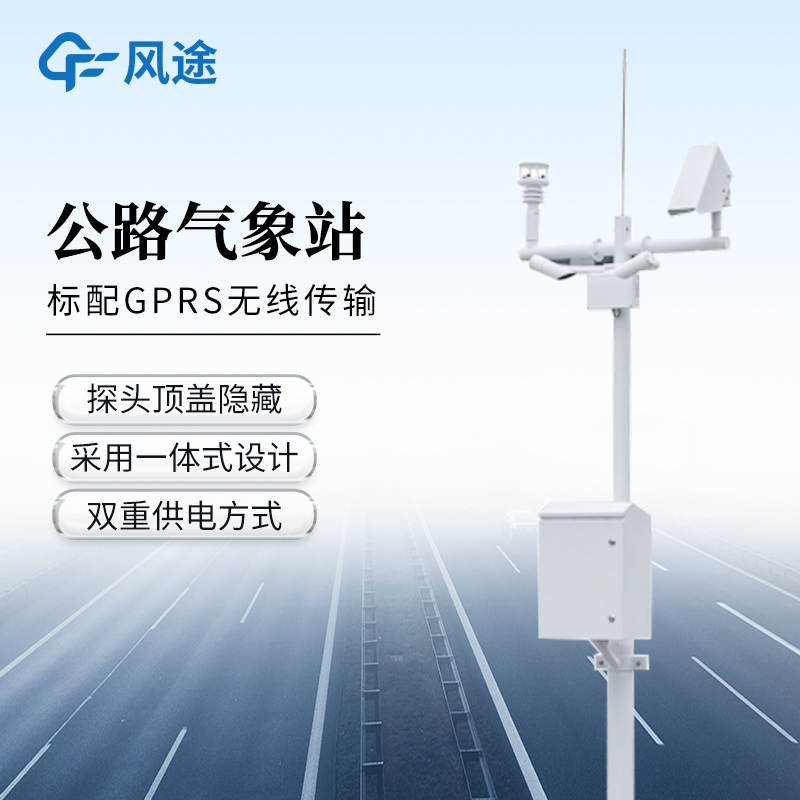
Road Weather Station is the foundation for the realization of intelligent transportation. It monitors and predicts the actual weather conditions along railways or highways, provides traffic meteorological data of various locations for relevant departments, and facilitates them to make appropriate decisions.
Road Weather Station integrates various meteorological sensors from structure to system composition by using technologies such as automatic collection, intelligent perception and wireless communication. It can continuously collect meteorological information along traffic routes, obtain various meteorological elements such as CO₂, air pressure, rainfall, wind speed, wind direction, illumination, air temperature and humidity, soil temperature and humidity, PM2.5/PM10, etc. It conducts real-time monitoring, remote transmission and aggregation of these elements, providing original data for traffic meteorological guarantee services along each route. Based on these data, it can provide timely meteorological information services for highway authorities and travelers.
The components of Road Weather Station mainly include the following:
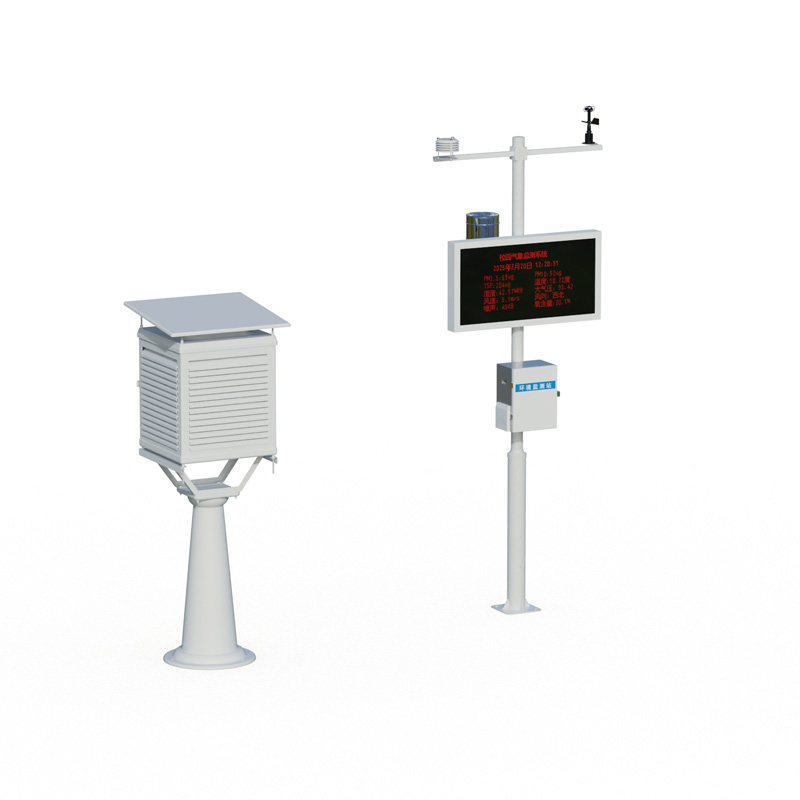
Collection system, which is responsible for monitoring various meteorological elements. This system has a variety of sensor types, mainly including air temperature and humidity sensors, tipping bucket rain gauges, soil temperature and humidity sensors, air pressure sensors, rain and snow sensors, wind speed/wind direction sensors, illumination sensors, PM2.5/PM10 sensors and other equipment, which can be flexibly selected and matched according to actual needs.
Bracket, which is used to place sensors, electric plates, control boxes and other hardware, generally with a height of 2 meters.
Power supply system, 220V mains electricity or solar panels can be used as power supply. In low-power operation, it can ensure the meteorological station to work continuously for 7-10 days.
Control box, which contains the host computer, is mainly used to collect the meteorological elements monitored by the sensors. After collection, the collector will transmit these meteorological elements to the cloud platform.
Atmospheric visibility has a significant impact on traffic safety. Adverse weather conditions such as dense fog, thick mist, sandstorms, heavy rain, snowstorms, and smoke pollution often reduce atmospheric visibility, posing great challenges to safe operations. Statistics show that approximately 25%...
Power transmission line micrometeorological online monitoring system is an industrial-grade multi-element monitoring system designed for the localized meteorological environment of transmission line corridors. It monitors parameters such as wind speed, wind direction, temperature, humidity, atmospheric pressure, and rainfall in real time, transmitting data wirelessly and providing over-limit warnings to support meteorological disaster prevention for high-voltage transmission lines....
Agricultural Weather Stations is a high-precision observation device specifically designed for monitoring and recording meteorological data in fields and forest areas. It can automatically monitor the climate of farmland or forest areas, measuring common meteorological elements such as air temperature, humidity, soil moisture, soil temperature, wind speed, wind direction, rainfall, and light intensity. The data is used to guide precision irrigation, fertilization, and pest and disease control, improving crop yields. Furthermore, it optimizes greenhouse environmental control by analyzing temperature, humidity, and light data....
The Stainless Steel Tipping Bucket Rain Gauge is the most classic rain gauge. It collects rainwater through an inclined funnel. When the rainwater reaches a certain amount, the tipping bucket below tilts and dumps the water. After the sensor detects this action, the rainfall can be determined.It can...


 Skype
Skype
 whatsapp
 mail
mail