Shandong Fengtu IOT Technology Co., Ltd
Sales Manager:Ms. Emily Wang
Cel,Whatsapp,Wechat:+86 15898932201
Email:info@fengtutec.com
Add:No. 155 Optoelectronic Industry Accelerator, Gaoxin District, Weifang, Shandong, China


Sales Manager:Ms. Emily Wang
Cel,Whatsapp,Wechat:+86 15898932201
Email:info@fengtutec.com
Add:No. 155 Optoelectronic Industry Accelerator, Gaoxin District, Weifang, Shandong, China
time:2026-04-27 11:14:46 source:Weather Station viewed:206 time
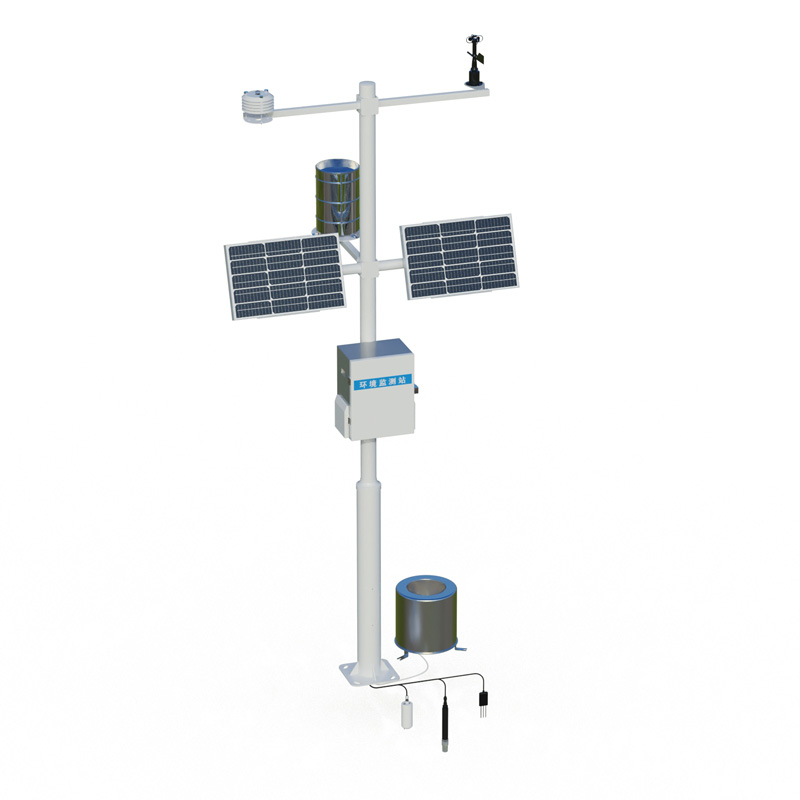
The Agricultural Microclimate Monitoring Station integrates a comprehensive array of sensors—including those for wind speed, wind direction, air temperature, humidity, atmospheric pressure, solar radiation, rainfall, evaporation, and soil temperature and moisture. Powered by solar energy and utilizing 4G wireless transmission, the system uploads collected data directly to a cloud-based platform. Featuring a "zero-configuration" design that requires no field debugging, the station allows for rapid deployment in various settings such as farmlands, greenhouses, and orchards.
The Agricultural Microclimate Monitoring Station is a comprehensive monitoring device designed for the automated collection of meteorological and soil data within outdoor field environments. The system comprises five primary components: meteorological sensors, a data logger, a solar power supply system, a mounting pole assembly, and a cloud-based management platform. Its installation process requires no complex calibration or debugging, allowing a single individual to complete the entire deployment. Widely utilized across farmlands, greenhouses, sandy terrains, orchards, and grasslands, the device provides continuous monitoring of environmental parameters that are critically linked to crop growth.
In terms of measurement parameters, the station simultaneously monitors wind speed, wind direction, air temperature, relative humidity, atmospheric pressure, total solar radiation, rainfall, evaporation rates, soil temperature, and soil moisture. Specifically, soil temperature and moisture are typically monitored using a multi-layer sensing architecture; with the ground surface designated as the 0 cm baseline, measurement points are positioned at specific intervals at varying depths below the surface, enabling the simultaneous observation of conditions across different crop root zones. Once aggregated by the data logger, this information is wirelessly transmitted—via a 4G communication module—to the cloud-based management platform, where users can access and view the data in real-time via a dedicated mobile application or a web-based interface.
Regarding hardware configuration, the meteorological sensor suite includes an anemometer (for wind speed and direction), temperature and humidity sensors, a barometer, a radiometer, a rain gauge, and an evaporation sensor; the soil sensor suite primarily consists of multi-layer probes for measuring soil temperature and moisture. The system employs a solar power solution—combining solar panels with backup batteries—ensuring continued, stable operation for several days even during periods of continuous overcast or rainy weather. As the core of the system, the data logger is responsible for processing sensor signals, storing collected data, and managing communication transmissions. The entire unit boasts an IP65-or-higher protection rating, guaranteeing stable and reliable long-term operation in outdoor environments.
In practical application, the Agricultural Microclimate Monitoring Station serves as a vital tool, providing essential data support for effective agricultural production management. Operators of facility agriculture install this equipment to monitor trends in temperature, humidity, and light intensity within greenhouses, thereby adjusting the opening of vents and the duration of thermal blanket coverage accordingly. Orchard growers utilize soil moisture sensors to acquire data on water content within the root zone; by integrating this information with evaporation data recorded by weather stations, they are able to implement precise, demand-driven irrigation. Open-field growers combine wind speed and rainfall data from weather stations with information regarding crop growth stages to identify optimal windows for sowing, pesticide application, and harvesting operations.
Data collected by agricultural microclimate observation stations serves not only to support production management during the current season but also to accumulate foundational data for long-term agricultural research. Through continuous, multi-year records of meteorological and soil data, agricultural research institutions analyze the patterns by which inter-annual climatic fluctuations impact crop yield and quality, thereby establishing regional crop growth models and disaster early-warning indicators. Agricultural technology extension agencies leverage networked data from multiple observation sites to generate county-scale maps of agricultural microclimate distribution, providing guidance on variety selection and farming schedules tailored to the specific conditions of different regions.
Visibility is a crucial factor in our daily lives and the operations of numerous industries. Weather conditions such as heavy fog and sandstorms can significantly reduce visibility, causing serious impacts on transportation and travel, and are highly likely to trigger traffic accidents. In the aviat...
electric field monitor is a fully digital electric field detection and lightning early warning platform that issues warnings before lightning strikes occur by monitoring and analyzing atmospheric electric field data. This system is widely used in lightning protection and disaster mitigation ef...
This integrated sensor unit for temperature, humidity, wind speed, wind direction, and air pressure utilizes ultrasonic probes to measure wind speed and direction, complemented by a diode junction voltage method for temperature measurement and capacitive elements for humidity sensing. All meas...
Online monitoring system for power transmission lines system is primarily installed on power transmission towers to monitor local meteorological parameters such as wind speed, wind direction, temperature, and humidity in real-time along the transmission line corridor. Designed for complex terr...



 Skype
Skype
 whatsapp
 mail
mail