Shandong Fengtu IOT Technology Co., Ltd
Sales Manager:Ms. Emily Wang
Cel,Whatsapp,Wechat:+86 15898932201
Email:info@fengtutec.com
Add:No. 155 Optoelectronic Industry Accelerator, Gaoxin District, Weifang, Shandong, China


Sales Manager:Ms. Emily Wang
Cel,Whatsapp,Wechat:+86 15898932201
Email:info@fengtutec.com
Add:No. 155 Optoelectronic Industry Accelerator, Gaoxin District, Weifang, Shandong, China
time:2026-06-29 10:03:08 source:Weather Station viewed:9 time
The online micro-meteorological monitoring system for transmission lines is a multi-element meteorological monitoring device installed on power transmission towers. It integrates sensors for temperature and humidity, wind speed and direction, rainfall, air pressure, and light intensity, transmitting data to the monitoring center via GPRS or fiber optics. It is suitable for complex transmission line scenarios such as long spans, high altitudes, and coastal areas.
The online micro-meteorological monitoring system for transmission lines is a multi-element micro-meteorological monitoring system designed for monitoring the local meteorological environment along transmission line corridors. my country has a vast territory and a complex and variable geographical environment. Transmission lines often pass through valleys, mountains, rivers, and other special terrains, which easily create local micro-meteorological conditions that differ significantly from the surrounding environment. Strong winds, localized severe convection, and sudden temperature drops can cause accidents such as conductor icing, wind-induced discharge, and tower tilting. Traditional meteorological monitoring stations are spaced far apart, making it difficult to accurately capture small-scale, real-time meteorological changes within the transmission corridor. The online micro-meteorological monitoring system for transmission lines is designed to solve this problem, aiming to achieve a shift from passive response to proactive defense. This system is primarily installed on power transmission towers, with installation locations customizable to customer requirements. It integrates multiple sensors for temperature and humidity, wind speed and direction, rainfall, air pressure, and sunlight intensity, collecting meteorological data in real time via a high-precision sensor array. The collected data is digitally processed and transmitted to the monitoring center via wireless networks such as GPRS or fiber optics. Maintenance personnel can view the meteorological dynamics of each monitoring point at any time via PC or mobile device. The system supports dynamic curve statistics and threshold alarm functions; when monitored meteorological data exceeds preset thresholds, it automatically issues warning messages via SMS to relevant personnel.
For power supply, the system employs a hybrid power supply method combining solar energy and batteries, supporting both inductive power and solar panel options. The equipment features low power consumption, making it suitable for harsh climatic environments. The backend software integrates data storage, visualization analysis, and cloud data storage functions.
This online micro-meteorological monitoring system for transmission lines is widely used in various scenarios, including long-span lines, windward lines, transmission lines around lakes, high-altitude lines, mountain lines, lines prone to abnormal conditions, and coastal lines. Through real-time monitoring and early warning, the system can effectively address the threats to transmission lines posed by meteorological disasters such as icing, wind deflection, and conductor galloping, providing guidance for the operation and maintenance of high-voltage transmission lines and improving the line's safe operation and disaster early warning capabilities.
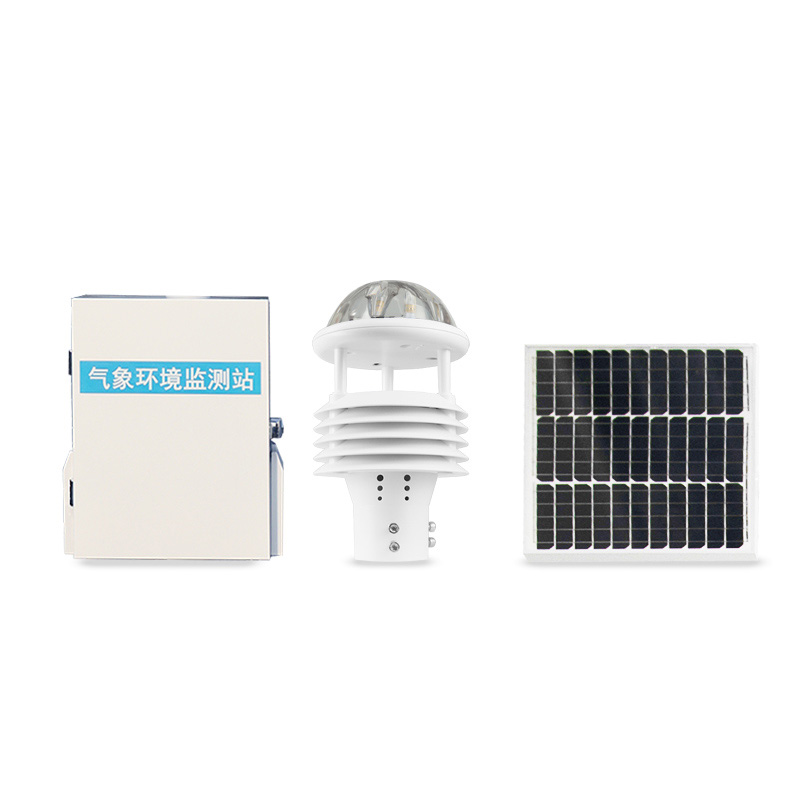
An Automatic Farmland Weather Station is an agricultural management system based on information technology. It continuously collects environmental data from agricultural production sites and provides decision support for production management through data analysis.The system uses a sensor network to...
BeiDou Environmental Monitoring Station integrates regional short message communication technologies from the BeiDou-2 and BeiDou-3 satellite systems with hydrological and environmental monitoring technologies to achieve 24-hour uninterrupted autonomous operation, real-time data transmission,...
The six elements in Weather Instruments usually refer to air temperature, humidity, air pressure, wind speed, wind direction, and rainfall amount. The air temperature reflects the degree of hotness or coldness of the air and has a significant impact on agricultural production, human comfort, etc. Hu...
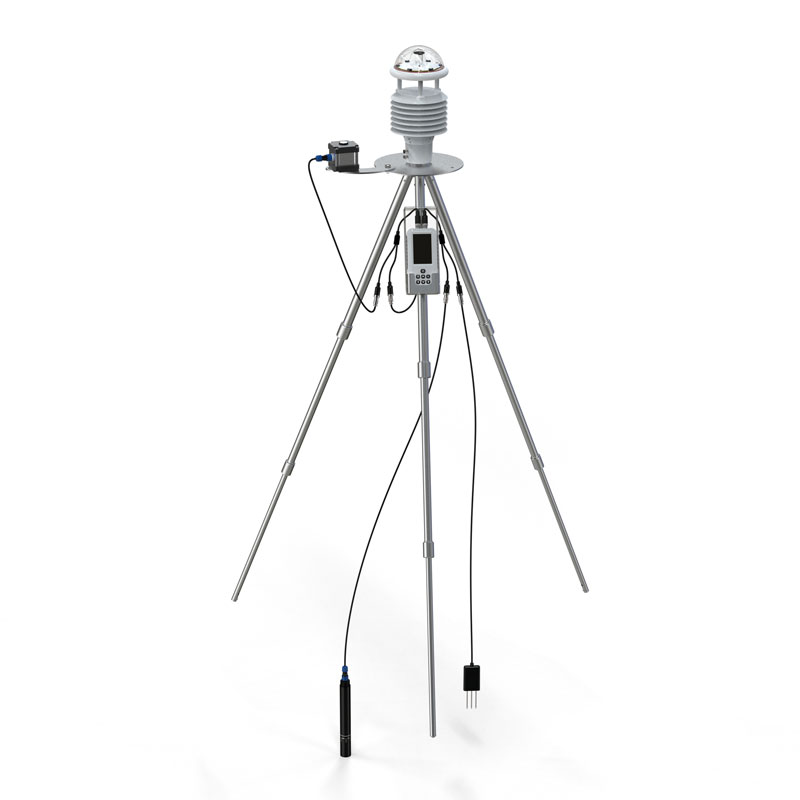
A Portable Weather Station is a mobile observation device that integrates multiple meteorological sensors. It is capable of monitoring and recording various atmospheric environmental elements in real-time, providing accurate on-site data support for core meteorological operations, emergency monitori...


 Skype
Skype
 whatsapp
 mail
mail