Shandong Fengtu IOT Technology Co., Ltd
Sales Manager:Ms. Emily Wang
Cel,Whatsapp,Wechat:+86 15898932201
Email:info@fengtutec.com
Add:No. 155 Optoelectronic Industry Accelerator, Gaoxin District, Weifang, Shandong, China


Sales Manager:Ms. Emily Wang
Cel,Whatsapp,Wechat:+86 15898932201
Email:info@fengtutec.com
Add:No. 155 Optoelectronic Industry Accelerator, Gaoxin District, Weifang, Shandong, China
time:2026-05-15 10:55:43 source:Weather Station viewed:214 time
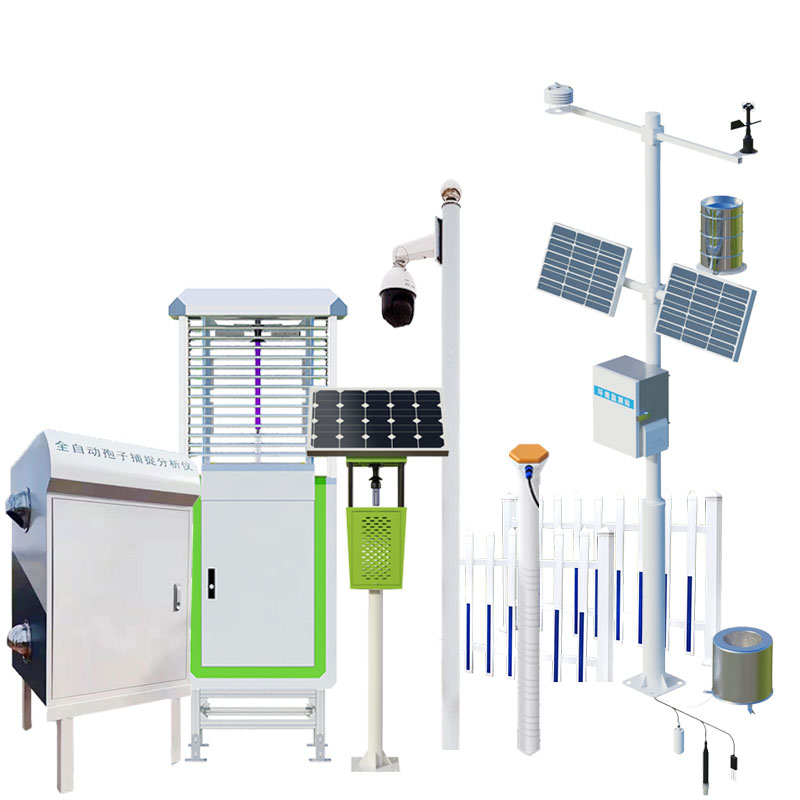
The system consists of a tubular soil moisture monitor, pest monitoring lamps, a weather station, video surveillance, and a spore trapping device. It uploads soil, weather, pest, and seedling growth images to a cloud platform via a 4G network, enabling real-time dynamic monitoring and online data analysis of the farmland production environment. It is suitable for high-standard farmland and modern agricultural demonstration zones.
The Agricultural IoT Monitoring System is an integrated system designed to meet the monitoring needs of the agricultural production environment, often referred to as the "Four Conditions Monitoring System." This system mainly comprises components such as a tubular soil moisture monitor, pest monitoring lamps, a weather station, video surveillance, fencing, wind-suction insecticidal lamps, a spore trapping device, and a cloud platform. It can systematically monitor and manage farmland soil conditions, pest and disease conditions, climate conditions, and crop growth. The system utilizes wireless sensors and IoT technology to collect real-time data on various parameters at each monitoring point, including pest and disease status, crop growth, disaster conditions, air temperature, humidity, dew point, soil temperature, and light intensity.
For soil moisture monitoring, the system remotely acquires data on soil temperature, humidity, moisture, and pH levels using a tubular soil moisture monitor, and can analyze historical soil moisture data online on a cloud platform. For pest monitoring, the equipment uses intelligent pest monitoring lamps for pollution-free insect trapping and killing. Far-infrared heating devices attract pests, and high-definition cameras capture images of the insects, which are then automatically identified and counted using AI algorithms. The pest monitoring lamps employ modern integrated optical, electronic, and CNC technologies to automatically complete system operations such as insect trapping, killing, insect dispersion, photography, transportation, and collection.
For meteorological monitoring, the weather station integrates multiple sensors for air temperature and humidity, wind speed and direction, rainfall, light intensity, and carbon dioxide concentration, continuously collecting data on the farmland environment 24 hours a day. For seedling monitoring, high-definition network PTZ cameras or 360° omnidirectional infrared spherical cameras allow for clear and intuitive remote monitoring of crop growth. For spore monitoring, the spore trapping device uses a 1000x optical magnification microscope to periodically and clearly capture spore images, automatically focusing and uploading them to the platform, enabling 24/7 unattended automatic monitoring.
All data collected by the system is uploaded to the cloud platform via 4G, Ethernet, and other communication methods. Users can access the data through web, PC, and mobile clients. The platform supports large-screen visual real-time monitoring and has an early warning function. When monitored data exceeds thresholds, the system automatically pushes warning information, achieving digital control of refined farmland management and safe production. This system has been deployed and applied in several modern agricultural demonstration zones such as Dengzhou and Hulunbuir, helping agricultural technicians shift from experience-based to data-driven production management.
Low-visibility weather conditions such as fog, haze, precipitation, and sandstorms not only cause great inconvenience to travel but also frequently trigger major accidents, leading to severe casualties and economic losses. However, the existing Doppler weather radars in meteorological and environmen...
Rain, fog, and other harsh weather conditions are major "adversaries" threatening traffic safety. Low visibility in particular severely impairs drivers' vision, highly increasing the risk of traffic accidents and causing casualties and property losses. The emergence of Atmospheric Visi...
Drizzle is a precipitation phenomenon characterized by fine and gentle raindrops with a relatively small precipitation amount. The monitoring of rainfall is mainly achieved by measuring the precipitation amount per unit area within a unit of time.Meteorologically, the precipitation amount is usually...
Visibility can be measured by visual observation, relying on manual inspection to estimate the visibility distance based on whether a certain reference object is visible. This method is simple and intuitive, but it is highly subjective and has poor standardization and objectivity.We recommend using...


 Skype
Skype
 whatsapp
 mail
mail